


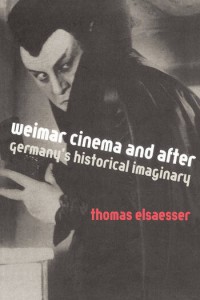
Weimar Cinema and After
Germany's Historical Imaginary


 (0 vote)
Average rating:
| 0 | rating |  = We can do without = We can do without |
| 0 | rating |  = Good book = Good book |
| 0 | rating |  = Excellent book = Excellent book |
| 0 | rating |  = Unique / a reference = Unique / a reference |
Your rating: -
Book Presentation:
German cinema of the 1920s is still regarded as one of the 'golden ages' of world cinema. Films such as The Cabinet of Dr Caligari, Dr Mabuse the Gambler, Nosferatu, Metropolis, Pandora's Box and The Blue Angel have long been canonised as classics, but they are also among the key films defining an image of Germany as a nation uneasy with itself. The work of directors like Fritz Lang, F.W. Murnau and G.W. Pabst, which having apparently announced the horrors of fascism, while testifying to the traumas of a defeated nation, still casts a long shadow over cinema in Germany, leaving film history and political history permanently intertwined.
Weimar Cinema and After offers a fresh perspective on this most 'national' of national cinemas, re-evaluating the arguments which view genres and movements such as 'films of the fantastic', 'Nazi Cinema', 'film noir' and 'New German Cinema' as typically German contributions to twentieth century visual culture. Thomas Elsaesser questions conventional readings which link these genres to romanticism and expressionism, and offers new approaches to analysing the function of national cinema in an advanced 'culture industry' and in a Germany constantly reinventing itself both geographically and politically.
Elsaesser argues that German cinema's significance lies less in its ability to promote democracy or predict fascism than in its contribution to the creation of a community sharing a 'historical imaginary' rather than a 'national identity'. In this respect, he argues, German cinema anticipated some of the problems facing contemporary nations in reconstituting their identities by means of media images, memory, and invented traditions.
About the Author:
Thomas Elsaesser is at the University of Amsterdam
Press Reviews:
'A monumental work of research by any standard.' - Sight and Sound
See the publisher website: Routledge
> From the same author:
The Mind-Game Film (2021)
Distributed Agency, Time Travel, and Productive Pathology
European Cinema and Continental Philosophy (2018)
Film As Thought Experiment
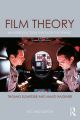
Film Theory (2015)
An Introduction through the Senses
by Thomas Elsaesser and Malte Hagener
Subject: Theory

German Cinema - Terror and Trauma (2013)
Cultural Memory Since 1945

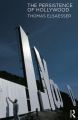


Harun Farocki (2004)
Working on the Sight-Lines
Dir. Thomas Elsaesser
Subject: Director > Harun Farocki

The Last Great American Picture Show (2004)
New Hollywood Cinema in the 1970s
Dir. Thomas Elsaesser, Noel King and Alexander Horwath
Subject: Countries > United States

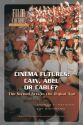
Cinema Futures, Cain, Abel or Cable? (1998)
The Screen Arts in the Digital Age
Dir. Thomas Elsaesser and Kay Hoffmann
Subject: Sociology
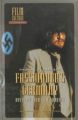
> On a related topic:
The Hygienic Apparatus (2022)
Weimar Cinema and Environmental Disorder
The Long Century's Long Shadow (2021)
Weimar Cinema and the Romantic Modern

Berlin Alexanderplatz (2009)
Radio, Film, and the Death of Weimar Culture
The Haunted Screen (2008)
Expressionism in the German Cinema and the Influence of Max Reinhardt

Afterlives (2016)
Allegories of Film and Mortality in Early Weimar Germany
by Steve Choe
Subject: Silent Cinema
Film Societies in Germany and Austria 1910-1933 (2023)
Tracing the Social Life of Cinema
 Back
Back

