

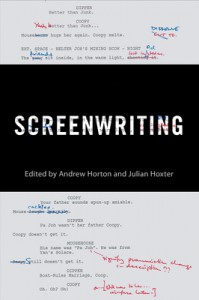
Screenwriting
Edited by Andrew Horton and Julian Hoxter


 (0 vote)
Average rating:
| 0 | rating |  = We can do without = We can do without |
| 0 | rating |  = Good book = Good book |
| 0 | rating |  = Excellent book = Excellent book |
| 0 | rating |  = Unique / a reference = Unique / a reference |
Your rating: -
Book Presentation:
Screenwriters often joke that “no one ever paid a dollar at a movie theater to watch a screenplay.” Yet the screenplay is where a movie begins, determining whether a production gets the “green light” from its financial backers and wins approval from its audience. This innovative volume gives readers a comprehensive portrait of the art and business of screenwriting, while showing how the role of the screenwriter has evolved over the years.
Reaching back to the early days of Hollywood, when moonlighting novelists, playwrights, and journalists were first hired to write scenarios and photoplays, Screenwriting illuminates the profound ways that screenwriters have contributed to the films we love. This book explores the social, political, and economic implications of the changing craft of American screenwriting from the silent screen through the classical Hollywood years, the rise of independent cinema, and on to the contemporary global multi-media marketplace. From The Birth of a Nation (1915), Gone With the Wind (1939), and Gentleman’s Agreement (1947) to Chinatown (1974), American Beauty (1999), and Lost in Translation (2003), each project began as writers with pen and ink, typewriters, or computers captured the hopes and dreams, the nightmares and concerns of the periods in which they were writing.
As the contributors take us behind the silver screen to chronicle the history of screenwriting, they spotlight a range of key screenplays that changed the game in Hollywood and beyond. With original essays from both distinguished film scholars and accomplished screenwriters, Screenwriting is sure to fascinate anyone with an interest in Hollywood, from movie buffs to industry professionals.
About the authors:
ANDREW HORTON is the Jeanne H. Smith Professor of Film and Video Studies at the University of Oklahoma. He is an award-winning screenwriter and the author of twenty-six books, including Screenwriting for a Global Market.JULIAN HOXTER is an associate professor of cinema and screenwriting coordinator at San Francisco State University. The author of Write What You Don’t Know: An Accessible Manual for Screenwriters, he is also an award-winning filmmaker, a rewrite specialist, and a story consultant for independent features.
Press Reviews:
"Screenwriting does an excellent job combining the larger historical context and specific textual evidence."
— Journal of Film and Video
"Six insightful critics turn their collective gaze to Hollywood's least-gratifying field of endeavor and redefine the writer's role in film history. A witty, instructive, and long overdue survey."
— Sam Hamm
> Books with the same or similar title:
> From the same authors:

Play It Again, Sam (2022)
Retakes on Remakes
Dir. Andrew Horton and Stuart Y. McDougal
Subject: Economics
Theorizing Stupid Media (2020)
De-Naturalizing Story Structures in the Cinematic, Televisual, and Videogames
by Aaron Kerner and Julian Hoxter
Subject: Sociology
Off the Page (2017)
Screenwriting in the Era of Media Convergence
by Daniel Bernardi and Julian Hoxter
Subject: Technique > Scriptwriting

Screenwriting for a Global Market (2004)
Selling Your Scripts from Hollywood to Hong Kong
Subject: Technique > Scriptwriting
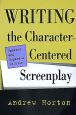
Writing the Character-Centered Screenplay (2000)
Updated and Expanded edition
Subject: Technique > Scriptwriting
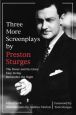
Three More Screenplays by Preston Sturges (1998)
The Power and the Glory, Easy Living, and Remember the Night
by Preston Sturges and Andrew Horton
Subject: One Film > Remember the Night, The Power and the Glory, Easy Living
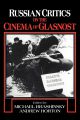
Russian Critics on the Cinema of Glasnost (1994)
Dir. Michael Brashinsky, Andrew Horton and William Rothman
Subject: Countries > Russia / USSR

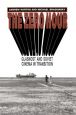
The Zero Hour (1992)
Glasnost and Soviet Cinema in Transition
by Andrew Horton and Michael Brashinsky
Subject: Countries > Russia / USSR
> On a related topic:
Scriptwriting Techniques and Technologies (2024)
Dir. Olivier Asselin and Isabelle Raynauld
(in English and French)
Subject: Technique > Scriptwriting
A Guide to Post-classical Narration (2023)
The Future of Film Storytelling
Subject: Technique > Scriptwriting
Reading and Writing a Screenplay (2019)
Fiction, Documentary and New Media
Subject: Technique > Scriptwriting

Save the Cat! Strikes Back (2009)
More Trouble for Screenwriters to Get into ... and Out of
by Blake Snyder
Subject: Technique > Scriptwriting
Script Culture and the American Screenplay (2008)
Subject: Technique > Scriptwriting

Save The Cat! (2005)
The Last Book on Screenwriting You'll Ever Need
by Blake Snyder
Subject: Technique > Scriptwriting
The Heart of Your Script (2026)
The Insider's Guide to Writing the Difficult Middle Section of a Screenplay
by Ted Wilkes and Phil Hughes
Subject: Technique > Scriptwriting
Games Directors Play (2026)
Tricks and Stratagems of Cinematic Storytelling
Subject: Technique > Scriptwriting
Integrated Storytelling by Design (2026)
Concepts, Principles and Methods for New Narrative Dimensions
Subject: Technique > Scriptwriting
 Back
Back