


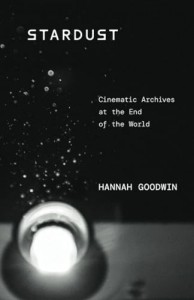
Stardust
Cinematic Archives at the End of the World


 (0 vote)
Average rating:
| 0 | rating |  = We can do without |
| 0 | rating |  = Good book |
| 0 | rating |  = Excellent book |
| 0 | rating |  = Unique / a reference |
Your rating: -
Book Presentation:
An exploration of the fundamental bond between cinema and the cosmos
The advent of cinema occurred alongside pivotal developments in astronomy and astrophysics, including Albert Einstein’s theories of relativity, all of which dramatically altered our conception of time and provided new means of envisioning the limits of our world. Tracing the many aesthetic, philosophical, and technological parallels between these fields, Stardust explores how cinema has routinely looked toward the cosmos to reflect our collective anxiety about a universe without us.
Employing a “cosmocinematic gaze,” Hannah Goodwin uses the metaphorical frameworks from astronomy to posit new understandings of cinematic time and underscore the role of light in generating archives for an uncertain future. Surveying a broad range of works, including silent-era educational films, avant-garde experimental works, and contemporary blockbusters, she carves out a distinctive area of film analysis that extends its reach far beyond mainstream science fiction to explore films that reckon with a future in which humans are absent.
This expansive study details the shared affinities between cinema and the stars in order to demonstrate how filmmakers have used cosmic imagery and themes to respond to the twentieth century’s moments of existential dread, from World War I to the atomic age to our current moment of environmental collapse. As our outlook on the future continues to change, Stardust illuminates the promise of cinema to bear witness to humanity’s fragile existence within the vast expanse of the universe.
About the Author:
Hannah Goodwin is assistant professor of film and media studies at Mount Holyoke College.
> On a related topic:
Towards a Feminist Cinematic Ethics (2026)
Claire Denis, Emmanuel Levinas and Jean-Luc Nancy
Subject: Theory
Radical Embodiment on Film (2026)
Time and the Cinematic Body
Dir. Louis Bayman and Davina Quinlivan
Subject: Theory
Filmmakers on Film (2026)
Global Perspectives
Dir. André Rui Graça, Manuela Penafria and Eduardo Tulio Baggio
Subject: Theory
Charlie Kaufman's Möbius Strip (2026)
Film, Philosophy and Literary Theory
by Colm O’Shea
Subject: Theory
The Attractions of the Moving Image (2025)
Essays on History, Theory, and the Avant-Garde
by Tom Gunning
Subject: Theory
 Back


