

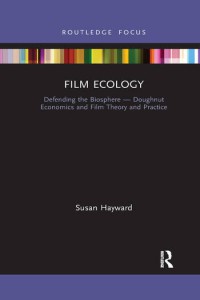
Film Ecology
Defending the Biosphere - Doughnut Economics and Film Theory and Practice


 (0 vote)
Moyenne des votes :
| 0 | vote |  = On peut s'en passer = On peut s'en passer |
| 0 | vote |  = Bon livre = Bon livre |
| 0 | vote |  = Excellent livre = Excellent livre |
| 0 | vote |  = Unique / une référence = Unique / une référence |
Votre vote : -
Description de l'ouvrage:
Using the Regenerative economic model – also known as Doughnut Economics – Susan Hayward offers a thought-provoking sketch for a renewed, tentatively revolutionary approach to both film theory and film practice.
This book attempts to answer the questions posed by T.J. Demos (in Against the Anthropocene, 2017): how do we find a way to address planetary harm and the issues it raises within the field of Film Studies? How do we construct a theoretical model that allows us to visualize the ecological transgressions brought about by the growth-model of capitalism which is heavily endorsed by mainstream narrative cinema? By turning to the model set out in Kate Raworth’s book Doughnut Economics (2017) and adapting its fundamental principles to a study of narrative cinema, Film Ecology proposes to show how, by using this model, we can usefully plot and investigate films according to criteria that are not genre/star/auteur-led, nor indeed embedded in anthropocentric theoretical models, but principles which are ecologically based. These arguments are brought to life with examples from mainstream narrative films such as The Giant (1956), Mildred Pierce (1945), Erin Brockovich (2000), Wall Street (1987), Hotel Rwanda (2004), and Missing Figures (2016).
This approach will inspire film practitioners, film theorists, critics and analysts, film students and film lovers alike to consider how they might integrate this Doughnut model into their thinking or work as part of their process.
À propos de l'auteur :
Susan Hayward is Emeritus Professor of Cinema Studies at Exeter University. She is the author of numerous books on French Cinema and Cinema Studies: The Key Concepts (now in its fifth edition).
> Du même auteur :
Ecology Documentaries (2021)
Their Function and Value Seen Through the Lens of Doughnut Economics
Sujet : Genre > Documentary
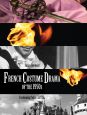
French Costume Drama of the 1950s (2010)
Fashioning Politics in Film

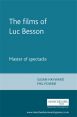
The Films of Luc Besson (2007)
Master of Spectacle
Dir. Susan Hayward et Philip Powrie
Sujet : Director > Luc Besson


> Sur un thème proche :
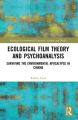
Ecological Film Theory and Psychoanalysis (2023)
Surviving the Environmental Apocalypse in Cinema
de Robert Geal
Sujet : Theory
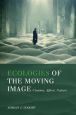
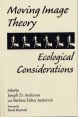
Moving Image Theory (2005)
Ecological Considerations
Dir. Joseph D. Anderson et Barbara Fisher Anderson
Sujet : Theory
Elemental World Cinema (2025)
Cinematic Entanglements of Earth, Fire, Water and Air
Dir. Tiago de Luca et Matilda Mroz
Sujet : Sociology
Radical Embodiment on Film (2026)
Time and the Cinematic Body
Dir. Louis Bayman et Davina Quinlivan
Sujet : Theory
Filmmakers on Film (2026)
Global Perspectives
Dir. André Rui Graça, Manuela Penafria et Eduardo Tulio Baggio
Sujet : Theory
 Retour