


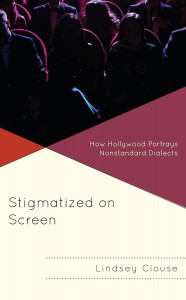
Stigmatized on Screen
How Hollywood Portrays Nonstandard Dialects


 (0 vote)
Average rating:
| 0 | rating |  = We can do without = We can do without |
| 0 | rating |  = Good book = Good book |
| 0 | rating |  = Excellent book = Excellent book |
| 0 | rating |  = Unique / a reference = Unique / a reference |
Your rating: -
Book Presentation:
This book reveals how marginalized communities and women are underrepresented on our screens and, too often, depicted in stereotypical ways. This is doubly true for marginalized speakers—those who speak traditionally “nonstandard” dialects. Lindsey Clouse examines the origins of linguistic prejudice and how our public schools perpetuate the myth of “bad” English. By dissecting the 500 top-grossing films of the last 20 years, Clouse exposes how speakers of Black English, Southern U.S. English, Spanish-influenced English, and gendered speech patterns are represented, underrepresented, misrepresented, and mocked. Clouse analyzes hundreds of films and characters to reveal how filmmakers and audiences work together to reinforce negative beliefs about stigmatized dialects and the people who speak them and reveals how those beliefs stack up against decades of linguistic research. She concludes by showing that these portrayals translate to real-life linguistic discrimination and discusses the ways in which we can combat this often-hidden prejudice. Scholars of introductory sociolinguistics, american dialect studies, and media studies, will find this book of particular interest.
About the Author:
Lindsey Clouse is instructor of English at Western Dakota Technical College and Black Hills State University in Rapid City, South Dakota.
Press Reviews:
"Clouse's cross-genre look at pop culture representations of dialect and accent as encoded proxies for tightly held cultural beliefs and stereotypes about race and identity goes beyond the superficial questions we ask ourselves as filmgoers and media-consumers — Why do the heros have mainstream accents? Why does the racist character have a southern accent in Chicago? With a thorough synthesis of data and a stark reveal of the jaundiced and mis-representational linguistic and lexical crutches of Hollywood's entertainment-makers, Clouse makes a compelling case that even shows praised for their authenticity reveal motives for entertainment at the cost of linguistic accuracies."
-- Grant Barrett, Vice President for Communications and Technology, American Dialect Society
> On a related topic:

Linguistic and Cultural Representation in Audiovisual Translation (2020)
Dir. Irene Ranzato and Serenella Zanotti
Subject: Sociology

Totally Scripted (2017)
Idioms, Words, and Quotes from Hollywood to Broadway That Have Changed the English Language
Subject: Sociology

Multilingual Films in Translation (2017)
A Sociolinguistic and Intercultural Study of Diasporic Films
Subject: Sociology
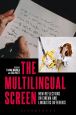
The Multilingual Screen (2016)
New Reflections on Cinema and Linguistic Difference
Dir. Tijana Mamula
Subject: Sociology
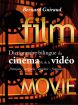
Dictionnaire bilingue du cinéma & de la vidéo (2020)
français-anglais / anglais-français
by Bernard Guiraud
(in French and English)
Subject: General
 Back
Back

