

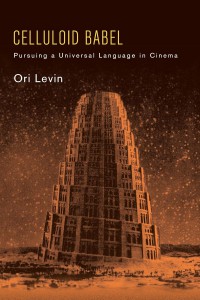
Celluloid Babel
Pursuing a Universal Language in Cinema
by Ori Levin


 (0 vote)
Average rating:
| 0 | rating |  = We can do without = We can do without |
| 0 | rating |  = Good book = Good book |
| 0 | rating |  = Excellent book = Excellent book |
| 0 | rating |  = Unique / a reference = Unique / a reference |
Your rating: -
Book Presentation:
Traces the intellectual history of cinema's aspiration to create a universal language, examining how this vision has been articulated in both writings and films.
Celluloid Babel offers a transnational intellectual history of cinema's quest for universal language, unfolding through both writings and films. Today, algorithms and data-collection systems play a significant role in predicting the viewer's preferences and suggesting content specifically tailored to their particular interests. However, this promise of on-demand personalized media is markedly different from the promise outlined in cinema's initial promotional discourse, which celebrated the medium’s ability to appeal to a universal audience. Instead of targeting fragmented audiences, cinema was supposed to captivate and engage everyone all at once, regardless of social station, educational level, or national affiliation. The aspiration for a universal language left an indelible mark on film history, yet despite its significance, the history and theory behind it remain largely unexplored. Celluloid Babel illuminates a pivotal chapter in early film theory and establishes it as the inaugural paradigm of thought on cinema’s nature. By exploring this pursuit, the book reveals the forgotten utopian potential of mass media and uncovers complex correlations among political ideals, aesthetic preferences, material conditions, modes of spectatorship, and governance.
About the Author:
Both a film scholar and a video artist, Ori Levin is Assistant Professor in the Steve Tisch School of Film and Television at Tel Aviv University. Her work focuses on early film and its relation to digital media, slapstick, and video art.
Press Reviews:
"Alert to both the ideas and the filmmaking it treats, this is a highly original work that addresses a key concept in the history of silent film, its claim to create new universal language. The vitality and wit of the author's voice is refreshing as well--although clearly a scholarly work, it is never dry or pedantic." -- Tom Gunning, University of Chicago
See the publisher website: State University of New York Press
> On a related topic:
The Multilingual Screen (2016)
New Reflections on Cinema and Linguistic Difference
Dir. Tijana Mamula
Subject: Sociology
Cinema as a Worldbuilding Machine in the Digital Era (2022)
Essay on Multiverse Films and TV Series
Subject: Theory
Reorienting Chinese Stars in Global Polyphonic Networks (2021)
Voice, Ethnicity, Power
Cosmopolitan Aspirations in Contemporary Cinema (2024)
Dir. Maria del Mar Azcona, Julia Echeverría and Pablo Gómez-Muñoz
Subject: Sociology
Crossover Cinema (2016)
Cross-Cultural Film from Production to Reception
Dir. Sukhmani Khorana
Subject: Sociology
 Back
Back

