


Crowds, Power, and Transformation in Cinema
by Lesley Brill

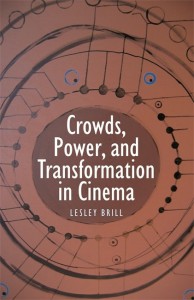

 (0 vote)
Average rating:
| 0 | rating |  = We can do without = We can do without |
| 0 | rating |  = Good book = Good book |
| 0 | rating |  = Excellent book = Excellent book |
| 0 | rating |  = Unique / a reference = Unique / a reference |
Your rating: -
Book Presentation:
A noted critic brings crowd theory to Film Studies, offering a bold new analysis of the pervasive cinematic themes of transformation and power.
From Intolerance to The Silence of the Lambs, motion pictures show crowds and power in complex, usually antagonistic, relationships. Key to understanding this opposition is an intrinsic capability of the cinema: transformation. Making unprecedented use of Elias Canetti's Crowds and Power, Lesley Brill explores crowds, power, and transformation throughout film history.
The formation of crowds together with crowd symbols and representations of power create complex, unifying structures in two early masterpieces, The Battleship Potemkin and Intolerance. In Throne of Blood, power-seekers become increasingly isolated, while the crowd of the dead seduces and overwhelms the living. The conflict between crowds and power in Citizen Kane takes place both within the protagonist and between him and the people he tries to master. North by Northwest, Killer of Sheep, and The Silence of the Lambs are rich in hunting and predation and show the crowd as a pack; transformation—true, false, and failed—is the key to both attack and escape.
Brill's study provides original insights into canonical movies and shows anew the central importance of transformation in film. Film theorists, critics, and historians will value this fresh and intriguing approach to film classics, which also has much to say about cinema itself and its unique relationship to mass audiences.
About the Author:
Lesley Brill is professor of English at Wayne State University. He is the author of John Huston’s Filmmaking (Cambridge University Press, 1997) and The Hitchcock Romance: Love and Irony in Hitchcock’s Films (Princeton University Press, 1991).
Press Reviews:
One of the rare works that turn film studies in truly new directions, Brill's book will also help Canetti studies become an increasingly dynamic interdisciplinary field. Brill's clear, often poetic prose provides an exciting introduction to Canetti's protean ideas while using them to explore key cinematic issues. Invigorating and invaluable."
-David Sterritt, Maryland Institute College of Art, Author of Guiltless Pleasures: a David Sterritt Film Reader
At last, a gifted critic has applied the ideas in Elias Canetti's Crowds and Power to the study of cinema. Writers on modernity have long associated movies with crowds, but thanks to Lesley Brill we have a full and sophisticated analysis of that relationship. This book is valuable not only as an original commentary on famous films but also as an intelligent introduction to Canetti's unusual and important work."
-James Naremore, Indiana University, Author of More than Night: Film Noir in Its Contexts
It is a searching, thoughtful, and illuminating study, written with care and clarity by a leading film scholar and devoted to an area hitherto little explored in film studies. It will surely find wide readership among those interested in the art and the cultural significance of cinema."
-Gilberto Perez, Sarah Lawrence College, Author of the Material Ghost
This is a provocative and original book-the first sustained analysis of the important role crowds play in films. Brill builds upon the powerful intellectual theories of Elias Canetti, transforming Canetti's philosophical meditations into tools for revealing intricate cinematic structures."
-Michael Tratner, Bryn Mawr College, Author of Deficits and Desires: Economics and Sexuality in Twentieth-Century Literature
> From the same author:

The Hitchcock Romance (1991)
Love and Irony in Hitchcock's Films
by Lesley Brill
Subject: Director > Alfred Hitchcock
> On a related topic:
Radical Embodiment on Film (2026)
Time and the Cinematic Body
Dir. Louis Bayman and Davina Quinlivan
Subject: Theory
Filmmakers on Film (2026)
Global Perspectives
Dir. André Rui Graça, Manuela Penafria and Eduardo Tulio Baggio
Subject: Theory
The Attractions of the Moving Image (2025)
Essays on History, Theory, and the Avant-Garde
by Tom Gunning
Subject: Theory
Contemporary Screen Ethics (2025)
Absences, Identities, Belonging, Looking Anew
Dir. Lucy Bolton, David Martin-Jones and Robert Sinnerbrink
Subject: Theory
Cinecepts, Deleuze, and Godard-Miéville (2025)
Developing Philosophy through Audiovisual Media
Subject: Theory
 Back
Back

