

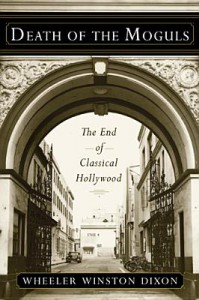
Death of the Moguls
The End of Classical Hollywood


 (0 vote)
Average rating:
| 0 | rating |  = We can do without = We can do without |
| 0 | rating |  = Good book = Good book |
| 0 | rating |  = Excellent book = Excellent book |
| 0 | rating |  = Unique / a reference = Unique / a reference |
Your rating: -
Book Presentation:
Death of the Moguls is a detailed assessment of the last days of the “rulers of film.” Wheeler Winston Dixon examines the careers of such moguls as Harry Cohn at Columbia, Louis B. Mayer at MGM, Jack L. Warner at Warner Brothers, Adolph Zukor at Paramount, and Herbert J. Yates at Republic in the dying days of their once-mighty empires. He asserts that the sheer force of personality and business acumen displayed by these moguls made the studios successful; their deaths or departures hastened the studios’ collapse. Almost none had a plan for leadership succession; they simply couldn't imagine a world in which they didn’t reign supreme.
Covering 20th Century-Fox, Selznick International Pictures, Metro-Goldwyn-Mayer, Paramount Pictures, RKO Radio Pictures, Warner Brothers, Universal Pictures, Republic Pictures, Monogram Pictures and Columbia Pictures, Dixon briefly introduces the studios and their respective bosses in the late 1940s, just before the collapse, then chronicles the last productions from the studios and their eventual demise in the late 1950s and early 1960s. He details such game-changing factors as the de Havilland decision, which made actors free agents; the Consent Decree, which forced the studios to get rid of their theaters; how the moguls dealt with their collapsing empires in the television era; and the end of the conventional studio assembly line, where producers had rosters of directors, writers, and actors under their command.
Complemented by rare, behind-the-scenes stills, Death of the Moguls is a compelling narrative of the end of the studio system at each of the Hollywood majors as television, the de Havilland decision, and the Consent Decree forced studios to slash payrolls, make the shift to color, 3D, and CinemaScope in desperate last-ditch efforts to save their kingdoms. The aftermath for some was the final switch to television production and, in some cases, the distribution of independent film.
About the Author:
WHEELER WINSTON DIXON is the James Ryan Endowed Professor of Film Studies at the University of Nebraska, Lincoln. His many books include 21st Century Hollywood: Movies in the Era of Transformation (co-authored with Gwendolyn Audrey Foster), A History of Horror, and Film Noir and the Cinema of Paranoia (all Rutgers University Press).
Press Reviews:
"In this accessible and engaging history of the moguls who made the studios successful through sheer force of personality, Dixon does a terrific job of getting inside the heads of the bosses who built their studios into major entertainment factories."
— Barry Keith Grant
"In this book, written with his usual critical acumen, Wheeler Winston Dixon gives a lucid and penetrating account of the men who ran the old Hollywood studio system and of the ultimate decline and fall of their empires."
— Steven Shaviro
"Death of the Moguls is an immensely readable, deeply informed survey of a mythic moment in American moviemaking."
— Film Criticism
> From the same author:
A Short History of Film (2025)
by Wheeler Winston Dixon and Gwendolyn Audrey Foster
Subject: History of Cinema



21st-Century Hollywood (2011)
Movies in the Era of Transformation
by Wheeler Winston Dixon and Gwendolyn Audrey Foster
Subject: Economics
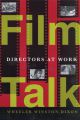

Visions of Paradise (2006)
Images of Eden in the Cinema

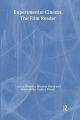
Experimental Cinema, The Film Reader (2002)
Dir. Gwendolyn Audrey Foster and Wheeler Winston Dixon
Subject: Genre > Experimental

The Exploding Eye (1997)
A Re-Visionary History of 1960s American Experimental Cinema
Subject: Genre > Experimental
> On a related topic:
Engulfed (2021)
The Death of Paramount Pictures and the Birth of Corporate Hollywood

The Hollywood Trust (2016)
Trade Associations and the Rise of the Studio System
by Kia Afra
Subject: History of Cinema

Power Surge (2026)
Conglomerate Hollywood and the Studio System's Last Hurrah
Hollywood by Hollywood (2018)
The Backstudio Picture and the Mystique of Making Movies
by Steven Cohan
 Back
Back