


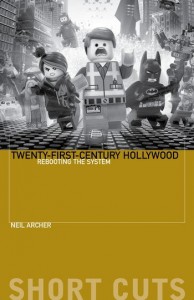
Twenty-First-Century Hollywood
Rebooting the System
by Neil Archer


 (0 vote)
Average rating:
| 0 | rating |  = We can do without = We can do without |
| 0 | rating |  = Good book = Good book |
| 0 | rating |  = Excellent book = Excellent book |
| 0 | rating |  = Unique / a reference = Unique / a reference |
Your rating: -
Book Presentation:
Twenty-First-Century Hollywood looks into the contexts of studio film production in the new century in order to understand what shapes the style and content of present-day cinema. In an era dominated in box-office terms by the franchise and the family film, this book combines close textual readings and industrial analysis, illustrating why these kinds of movies are favored in the contemporary climate by producers and audiences alike. Neil Archer critically explores the narrative and aesthetic strategies at work in Hollywood’s most high-profile films, from Harry Potter, to Marvel’s Cinematic Universe, to The Lego Movie. Along the way, the book answers some often unexpected questions: Why is Hollywood nervous about flying saucers? Why might the cinematic auteur be Hollywood’s savior? And why are the most grown-up movies those made for children? As this study shows, like the films themselves, the answers to these questions are often complex and surprising.
About the Author:
Neil Archer is a lecturer in film at Keele University. He is the author of The Road Movie: In Search of Meaning (Wallflower, 2016), Hot Fuzz (Auteur, 2015), and The Bourne Ultimatum (Auteur, 2012).
Press Reviews:
Surveying the industrial landscape and the dominant formal-aesthetic issues at stake, Twenty-First-Century Hollywood offers an insightful and engaging synthesis of many of the most important approaches to contemporary Hollywood. Archer's close readings and case studies persuasively demonstrate how forces such as marketing, synergy, and franchising have shaped many recent Hollywood films. Tom Schatz, University of Texas at Austin
> From the same author:

Cinema and Brexit (2022)
The Politics of Popular English Film
by Neil Archer
Subject: Countries > Great Britain
Beyond a Joke (2021)
Parody in English Film and Television Comedy
by Neil Archer
Subject: Countries > Great Britain




> On a related topic:



The Hollywood Trust (2016)
Trade Associations and the Rise of the Studio System
by Kia Afra
Subject: History of Cinema
Hollywood Remaking (2024)
How Film Remakes, Sequels, and Franchises Shape Industry and Culture
Subject: Economics


Play It Again, Sam (2022)
Retakes on Remakes
Dir. Andrew Horton and Stuart Y. McDougal
Subject: Economics
Hollywood's Embassies (2022)
How Movie Theaters Projected American Power Around the World
by Ross Melnick
Subject: Economics
 Back
Back

