


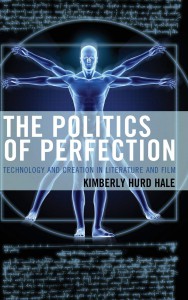
The Politics of Perfection
Technology and Creation in Literature and Film


 (0 vote)
Average rating:
| 0 | rating |  = We can do without = We can do without |
| 0 | rating |  = Good book = Good book |
| 0 | rating |  = Excellent book = Excellent book |
| 0 | rating |  = Unique / a reference = Unique / a reference |
Your rating: -
Book Presentation:
The Politics of Perfection: Technology and Creation in Literature and Film provides an exploration of the relationship between modern technological progress and classical liberalism. Each chapter provides a detailed analysis of a film or novel, including Fritz Lang’s Metropolis, Ridley Scott’s Prometheus, Michael Gondry’s Eternal Sunshine of the Spotless Mind, Kazuo Ishiguro’s Never Let Me Go, and Margaret Atwood’s Oryx and Crake. These works of fiction are examined through the lens of political thinkers ranging from Plato to Hannah Arendt. The compatibility of classical liberalism and technology is questioned, using fiction as a window into Western society’s views on politics, economics, religion, technology, and the family. This project explores the intersection between human nature and creation, particularly artificial intelligence and genetic engineering, using works of literature and film to access cultural concerns. Each of the works featured asks a question about the relationship between technology and creation. Technology also allows humanity to create new types of life in the forms of artificial intelligence and genetically engineered beings. This book studies works of literature and film as evidence of the contemporary unease with the progress of technology and its effect on the political realm.
About the Author:
Kimberly Hurd Hale is assistant professor of politics at Coastal Carolina University.
Press Reviews:
The Politics of Perfection shows why and how philosophic thinking need not be confined to formal works of philosophy. Literature and film, when viewed with an eye towards important questions, provide essential fodder to explore life's most challenging unknowns. Hale's analysis helps her readers ask questions about whether or not there is a moral character to science and whether or not there is a human nature. In the end, she explains why it is necessary to ensure the moral character of our society by protecting the rights of the individual to life and liberty. -- Erin A. Dolgoy
Working at the intersection of literature, film, and philosophy, Hale is able to show the ways artifacts of pop culture are imbued with philosophical insights and the ways political philosophy is both art and science. Her lucid prose makes this book accessible to students and teachers alike. By working through film and literature known well among the artifacts of popular culture, this book is likely to reach a conscientious public for whom technology is simultaneously a threat and a solution. -- Eduardo Velasquez, Independent Scholar
> On a related topic:
A Chronology of Film (2025)
A Cultural Timeline from the Magic Lantern to the Digital Screen
Subject: Theory
Cinema and Machine Vision (2024)
Artificial Intelligence, Aesthetics and Spectatorship
Subject: Theory
Fractal Narrative (2014)
About the Relationship Between Geometries and Technology and Its Impact on Narrative Spaces
Subject: Theory

Radical Embodiment on Film (2026)
Time and the Cinematic Body
Dir. Louis Bayman and Davina Quinlivan
Subject: Theory
 Back
Back

