


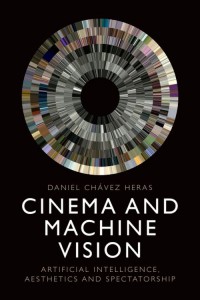
Cinema and Machine Vision
Artificial Intelligence, Aesthetics and Spectatorship


 (0 vote)
Average rating:
| 0 | rating |  = We can do without = We can do without |
| 0 | rating |  = Good book = Good book |
| 0 | rating |  = Excellent book = Excellent book |
| 0 | rating |  = Unique / a reference = Unique / a reference |
Your rating: -
Book Presentation:
Brings together Film Studies and Artificial Intelligence by exploring their mutual interest in the automation of vision through technology
• Theorises and critiques computational methods in the analysis of film and television
• Revisits key theories of the moving image and photography in the light of contemporary developments in AI and computer vision technologies
• Contributes to debates concerning early cinema, experimental cinema, and use of moving image archives, through critical-technical practices
• Theorises the emergence of synthetic media and generative approaches in computational humanities
Cinema and Machine Vision unfolds the aesthetic, epistemic, and ideological dimensions of machine-seeing films and television using computers. With its critical-technical approach, this book presents to the reader key new problems that arise as AI becomes integral to visual culture. It theorises machine vision through a selection of aesthetics, film theory, and applied machine learning research, dispelling widely held assumptions about computer systems designed to watch and make images on our behalf.
At its heart, Cinema and Machine Vision is an invitation for film and media scholars to critically engage with AI at a technical level, a prompt for scientists and engineers working with images and cultural data to critically reflect on where their assumptions about vision come from, and a joint recognition of the fruitful problems of working together to understand the algorithmic governance of the visual.
About the Author:
Daniel Chávez Heras is a Lecturer in Digital Culture and Creative Computing at King’s College London. He specialises on the computational production and analysis of visual culture combining critical frameworks in the history and theories of cinema, television, and photography, with advanced technical practice in creative and scientific computing, including applied machine learning technologies.
Daniel has worked extensively in interdisciplinary design and creative industries, in Mexico and in the UK, with cultural institutions such as The British Council, and the BBC. He is a member of the Creative AI Lab, in partnership with the Serpentine Gallery, and part of the Computational Humanities Research Group at King’s College London.
Press Reviews:
Cinema and machine vision rescaled the world, from cell to pixel, detail to data. Daniel Chavez Heras shows us the parallel and diverging ways they have become worldmaking. A wonderful and necessary book that starts the story of AI where it should be started: in much earlier technical imaging practices of cinema.
– Professor Jussi Parikka, Aarhus University, author of Operational Images
> On a related topic:
A Chronology of Film (2025)
A Cultural Timeline from the Magic Lantern to the Digital Screen
Subject: Theory

Fractal Narrative (2014)
About the Relationship Between Geometries and Technology and Its Impact on Narrative Spaces
Subject: Theory


Screens and Illusionism (2024)
Alternative Teleologies of Mediation
Dir. Peter Bloom and Dominique Jullien
Subject: Theory
Cinematic Modernism and Contemporary Film (2024)
Aesthetics and Narrative in the International Art Film
by Howard Finn
Subject: Theory
 Back
Back

