


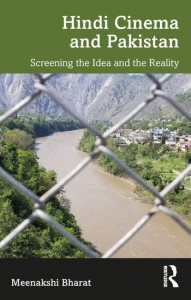
Hindi Cinema and Pakistan
Screening the Idea and the Reality


 (0 vote)
Average rating:
| 0 | rating |  = We can do without = We can do without |
| 0 | rating |  = Good book = Good book |
| 0 | rating |  = Excellent book = Excellent book |
| 0 | rating |  = Unique / a reference = Unique / a reference |
Your rating: -
Book Presentation:
Ever since the 1947 partition of the Indian subcontinent, Mumbai-based Hindi cinema has been returning compulsively to the idea of Pakistan, sometimes as the desirable other, sometimes as the horrifying antagonist. Hindi Cinema and Pakistan traces the genesis and development of this theme in Hindi cinema in the 1950s, showcasing its relevance as a tool that both reflects and shapes how India sees its neighbour, the India–Pakistan relationship, and itself.
The book is a serious, multi-platform, multi-pronged exploration of the appearances, invocations, representations and treatment of Pakistan and Pakistanis in Hindi cinema. It follows Hindi cinema’s efforts to come to terms with the ‘idea’ and ‘reality’ of Pakistan. Through in-depth analyses of the enmity and rivalry between the two subcontinental nations in Partition films, thrillers, epic war films and sports films, to screen depictions of the shared cultural past and similarities in films on cross-border love or in films that show a reaching out through humour, this book investigates the visualization of Pakistan and contextualizes these representations within the broader frameworks of India’s political, socio-cultural and popular discourse.
The extensive reach of the in-depth textual analyses of Hindi cinema will make this volume interesting and valuable both to the lay reader and to researchers and academics of cultural studies, media and film studies, and the study of socio-psychological violence in media and culture.
About the Author:
Meenakshi Bharat, writer, translator, reviewer and cultural theorist, teaches in the University of Delhi. Her special interests include children's literature, women's fiction, and film, postcolonial, translation and cultural studies—areas which she has extensively researched. She has published The Ultimate Colony: The Child in Postcolonial Fiction, a monograph, Desert in Bloom: Indian Women Writers of Fiction in English, Filming the Line of Control: The Indo-Pak Relationship through the Cinematic Lens, Rushdie the Novelist, children’s books, Little Elephant throws a Party and New Friends. Her wide and variegated writing, both creative and critical, is spurred by contemporary concerns. She has co-edited and contributed to five successful Indo-Australian Short Fiction anthologies (Fear Factor: Terror Incognito, Alien Shores: Asylum Seekers and Refugees, Only Connect: Technology and Us, Glass Walls: Stories of Tolerance and Intolerance, Relatively True: Stories of Truth, Deception and Post Truth (2022), which have variously taken on the burning issues of terrorism, asylum seekers, technology and us, tolerance and intolerance, and truth, deception and post-truth. Her monographs-- Troubled Testimonies: Terrorism and the English Novel in India (2016) and Shooting Terror: Terrorism and the Hindi Film (2020) take on the impact of terrorism on contemporary Indian culture. She served as President of the International Federation of Modern Languages and Literatures (FILLM, UNESCO, 2014-2017), as a bureau member of the International Council of Philosophy and the Human Sciences (CIPSH, UNESCO) and as the Treasurer of the Indian Association for the Study of Australia (IASA) from 2012-2016.
See the publisher website: Routledge
> From the same author:
Filming the Line of Control (2019)
The Indo–Pak Relationship through the Cinematic Lens
Dir. Meenakshi Bharat and Nirmal Kumar
Subject: Countries > South Asia
> On a related topic:
Crossover Stars in the Hindi Film Industry (2020)
Globalizing Pakistani Identity
by Dina Khdair
Subject: Countries > South Asia

The Neoliberal Self in Bollywood (2025)
Cinema, Popular Culture, and Identity
Muslim Identity in Hindi Cinema (2025)
Poetics and Politics of Genre and Representation
Déjà Viewed (2025)
Nation, Gender, and Genre in Bollywood Remakes of Hollywood Cinema
Centring Women in Bollywood Biopics (2024)
Empowerment and Agency in Contemporary Indian Cinema
Postcolonial Bollywood and Muslim Identity (2024)
Production, Representation, and Reception
 Back
Back

