


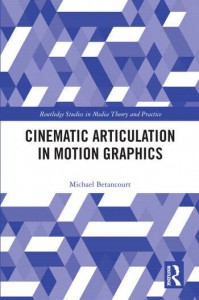
Cinematic Articulation in Motion Graphics


 (0 vote)
Average rating:
| 0 | rating |  = We can do without = We can do without |
| 0 | rating |  = Good book = Good book |
| 0 | rating |  = Excellent book = Excellent book |
| 0 | rating |  = Unique / a reference = Unique / a reference |
Your rating: -
Book Presentation:
This book develops a critical and theoretical approach to the semiotics of motion pictures as they are applied to a broader range of constructions than traditional commercial narrative productions.
This interdisciplinary approach begins with the problems posed by motion perception to develop a model of cinematic interpretation that includes both narrative and non-narrative types of productions. Contrasting traditional theatrical projection and varieties of new media, this book integrates analyses of title sequences, music videos, and visual effects with discussions on classic and avant-garde films. It further explores the intersection between formative audio-visual cues identified by viewers and how viewers’ desires direct engagement with the motion picture to present a framework for understanding cinematic articulation. This new theoretical model incorporates much of what was neglected and gives greater prominence to formerly critical marginal productions by showing the fundamental connections that link all moving imagery and animated text, whether it tells a story or not.
This insightful work will appeal to students and academics in film and media studies.
About the Author:
Michael Betancourt is a critical theorist and research artist concerned with media history, digital technology, and capitalist ideology. He is the author of more than 30 books. Deeply interdisciplinary, his writing has been translated into Chinese, French, German, Greek, Italian, Japanese, Persian, Portuguese, and Spanish. He is the author of The ____________ Manifesto and books such as The History of Motion Graphics and The Critique of Digital Capitalism, as well as several books on the semiotics of motion graphics. These publications complement his movies, which have screened internationally in galleries, museums, film festivals, and contemporary art fairs.
See the publisher website: Routledge
> From the same author:
Typography and Motion Graphics (2018)
The 'Reading-Image': The ‘Reading-Image'
Subject: Technique > All techniques
Beyond Spatial Montage (2016)
Windowing, or the Cinematic Displacement of Time, Motion, and Space
> On a related topic:
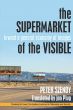
The Supermarket of the Visible (2019)
Toward a General Economy of Images
by Peter Szendy
Subject: Theory
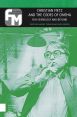
Christian Metz and the Codes of Cinema (2018)
Film Semiology and Beyond
Dir. Margrit Tröhler and Guido Kirsten
Subject: Theory
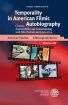
Temporality in American Filmic Autobiography (2018)
Cinema, Automediality and Grammatology with 'film Portrait' and 'joyce at 34'
Subject: Theory
Conversations with Christian Metz (2017)
Selected Interviews on Film Theory
Dir. Warren Buckland and Daniel Fairfax
Subject: Theory
 Back
Back

