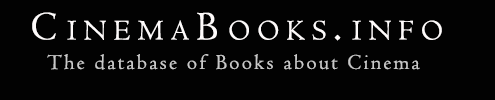


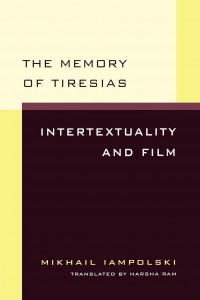
The Memory of Tiresias
Intertextuality and Film


 (0 vote)
Average rating:
| 0 | rating |  = We can do without = We can do without |
| 0 | rating |  = Good book = Good book |
| 0 | rating |  = Excellent book = Excellent book |
| 0 | rating |  = Unique / a reference = Unique / a reference |
Your rating: -
Book Presentation:
The concept of intertextuality has proven of inestimable value in recent attempts to understand the nature of literature and its relation to other systems of cultural meaning. In The Memory of Tiresias, Mikhail Iamposlki presents the first sustained attempt to develop a theory of cinematic intertextuality.
Building on the insights of semiotics and contemporary film theory, Iampolski defines cinema as a chain of transparent, mimetic fragments intermixed with quotations he calls "textual anomalies." These challenge the normalization of meaning and seek to open reading out onto the unlimited field of cultural history, which is understood in texts as a semiotically active extract, already inscribed.
Quotations obstruct mimesis and are consequently transformed in the process of semiosis, an operation that Iampolski defines as reading in an aura of enigma. In a series of brilliant analyses of films by D.W. Griffith, Sergei Eisenstein, and Luis Buñuel, he presents different strategies of intertextual reading in their work. His book suggests the continuing centrality of semiotic analysis and is certain to interest film historians and theorists, as well as readers in cultural and literary studies.
About the Author:
Mikhail Iampolski teaches in the departments of Slavic and Comparative Literature and Russian Studies at New York University.
Press Reviews:
"Iampolski deals with concepts and ideas that are highly complex and frequently very abstract, yet his discussion—and the progression of his analyses—is always precise and easy to follow. . . . Each of his points is grounded in a careful examination of a specific text, and most of the texts are well-known to American audiences."—Vladimir Padunov, University of Pittsburgh
> On a related topic:

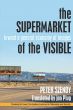
The Supermarket of the Visible (2019)
Toward a General Economy of Images
by Peter Szendy
Subject: Theory
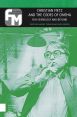
Christian Metz and the Codes of Cinema (2018)
Film Semiology and Beyond
Dir. Margrit Tröhler and Guido Kirsten
Subject: Theory
Temporality in American Filmic Autobiography (2018)
Cinema, Automediality and Grammatology with 'film Portrait' and 'joyce at 34'
Subject: Theory
Conversations with Christian Metz (2017)
Selected Interviews on Film Theory
Dir. Warren Buckland and Daniel Fairfax
Subject: Theory
 Back
Back

