


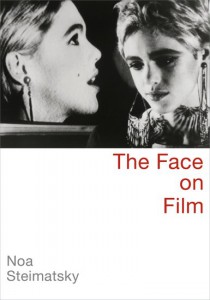
The Face on Film


 (0 vote)
Average rating:
| 0 | rating |  = We can do without = We can do without |
| 0 | rating |  = Good book = Good book |
| 0 | rating |  = Excellent book = Excellent book |
| 0 | rating |  = Unique / a reference = Unique / a reference |
Your rating: -
Book Presentation:
• Interlaces historical and theoretical considerations with close analysis of both popular and experimental films to investigate some of cinema's most powerful confrontations with the face
• The face on film is explored in relation to other arts and media, archaic and modern — masks, icons, pictorial portraits, mug shots, glamour and advertising images — and in relation to our experience of faces in the world
• Reflects on the convergence of archaic desires and modern anxieties in the cinema's encounter with the human face, and how it binds questions of aesthetics and ethics
The human face was said to have been rediscovered with the advent of motion pictures, in which it was often viewed as expressive locus, as figure, and even as essence of the cinema. But how has this modern, technological, mass-circulating medium revealed the face in ways that are also distinct from any other? How has it altered our perception of this quintessential incarnation of the person? The archaic powers of masks and icons, the fashioning of the individual in the humanist portrait, the modernist anxieties of fragmentation and de-figuration—these are among the cultural precedents informing our experience in the movie theatre. Yet the moving, time-based image also offers radical new confrontations with the face: Dreyer's Passion of Joan of Arc, Donen's Funny Face, Hitchcock's The Wrong Man, Bresson's Au hazard, Balthazar, Antonioni's Screen Test, Warhol's filmic portraits of celebrity and anonymity. Such intense encounters, examined in this book, manifest a desire for transparency and plenitude, but—especially in post-classical cinema—also betray a profound ambiguity that haunts the human countenance, confronting interiority as opacity, treading the gap between image and language. The spectacular impact of the cinematic face is uncannily intertwined with a reticence, an ineffability; but is it not for this very reason that—like faces in the world—it still enthralls us?
About the Author:
Noa Steimatsky, Visiting Associate Professor of Italian Studies, University of California—Berkeley, USA Noa Steimatsky is Visiting Associate Professor of Italian Studies at the University of California—Berkeley.
Press Reviews:
Winner of the Limina Prize 2017 for Best International Film Studies Book 2018
Honorary Mention from the Society for Cinema and Media Studies
> From the same author:
Italian Locations (2008)
Reinhabiting the Past in Postwar Cinema
> On a related topic:
Radical Embodiment on Film (2026)
Time and the Cinematic Body
Dir. Louis Bayman and Davina Quinlivan
Subject: Theory
Filmmakers on Film (2026)
Global Perspectives
Dir. André Rui Graça, Manuela Penafria and Eduardo Tulio Baggio
Subject: Theory


The Attractions of the Moving Image (2025)
Essays on History, Theory, and the Avant-Garde
by Tom Gunning
Subject: Theory
Contemporary Screen Ethics (2025)
Absences, Identities, Belonging, Looking Anew
Dir. Lucy Bolton, David Martin-Jones and Robert Sinnerbrink
Subject: Theory
Cinecepts, Deleuze, and Godard-Miéville (2025)
Developing Philosophy through Audiovisual Media
Subject: Theory
 Back
Back

