


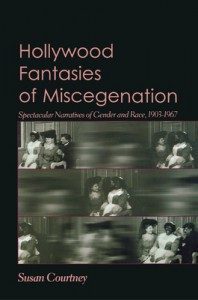
Hollywood Fantasies of Miscegenation
Spectacular Narratives of Gender and Race, 1903-1967


 (0 vote)
Average rating:
| 0 | rating |  = We can do without = We can do without |
| 0 | rating |  = Good book = Good book |
| 0 | rating |  = Excellent book = Excellent book |
| 0 | rating |  = Unique / a reference = Unique / a reference |
Your rating: -
Book Presentation:
Hollywood Fantasies of Miscegenation analyzes white fantasies of interracial desire in the history of popular American film. From the first interracial screen kiss of 1903, through the Production Code's nearly thirty-year ban on depictions of miscegenation, to the contemplation of mixed marriage in Guess Who's Coming to Dinner (1967), this book demonstrates a long, popular, yet underexamined record of cultural fantasy at the movies.
With ambitious new readings of well-known films like D.W. Griffith's 1915 epic The Birth of a Nation and of key forgotten films and censorship documents, Susan Courtney argues that dominant fantasies of miscegenation have had a profound impact on the form and content of American cinema.
What does it mean, Courtney asks, that the image of the black rapist became a virtual clich , while the sexual exploitation of black women by white men under slavery was perpetually repressed? What has this popular film legacy invited spectators to remember and forget? How has it shaped our conceptions of, and relationships to, race and gender?
Richly illustrated with more than 140 images, Hollywood Fantasies of Miscegenation carefully attends to cinematic detail, revising theories of identity and spectatorship as it expands critical histories of race, sex, and film. Courtney's new research on the Production Code's miscegenation clause also makes an important contribution, inviting us to consider how that clause was routinely interpreted and applied, and with what effects.
About the Author:
Susan Courtney is Associate Professor of English and Film Studies at the University of South Carolina, Columbia
> From the same author:
Split Screen Nation (2017)
Moving Images of the American West and South
Subject: Countries > United States
> On a related topic:

Visions of Invasion (2023)
Alien Affects, Cinema, and Citizenship in Settler Colonies
Subject: Sociology
White Supremacy and the American Media (2023)
Dir. Sarah D. Nilsen and Sarah E. Turner
Subject: Sociology
Whitewashing the Movies (2021)
Asian Erasure and White Subjectivity in U.S. Film Culture
by David C. Oh
Subject: Sociology
Gender, Ethnicity and Sexuality in Contemporary American Film (2016)
by Jude Davies and Carol R. Smith
Subject: Sociology
The Persistence of Whiteness (2007)
Race and Contemporary Hollywood Cinema
Dir. Daniel Bernardi
Subject: Sociology
Barry Jenkins and the Legacies of Slavery (2023)
The TV Series Adaptation of The Underground Railroad
Subject: One Film > The Underground Railroad (TV Series)
 Back
Back

