


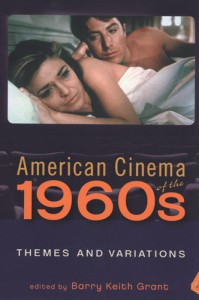
American Cinema of the 1960s
Themes and Variations
Edited by Barry Keith Grant


 (0 vote)
Average rating:
| 0 | rating |  = We can do without = We can do without |
| 0 | rating |  = Good book = Good book |
| 0 | rating |  = Excellent book = Excellent book |
| 0 | rating |  = Unique / a reference = Unique / a reference |
Your rating: -
Book Presentation:
The profound cultural and political changes of the 1960s brought the United States closer to social revolution than at any other time in the twentieth century. The country fragmented as various challenges to state power were met with increasing and violent resistance. The Cold War heated up and the Vietnam War divided Americans. Civil rights, women's liberation, and gay rights further emerged as significant social issues. Free love was celebrated even as the decade was marked by assassinations, mass murders, and social unrest.
At the same time, American cinema underwent radical change as well. The studio system crumbled, and the Production Code was replaced by a new ratings system. Among the challenges faced by the film industry was the dawning shift in theatrical exhibition from urban centers to surburban multiplexes, an increase in runaway productions, the rise of independent producers, and competition from both television and foreign art films. Hollywood movies became more cynical, violent, and sexually explicit, reflecting the changing values of the time.
In ten original essays, American Cinema of the 1960s examines a range of films that characterized the decade, including Hollywood movies, documentaries, and independent and experimental films. Among the films discussed are Elmer Gantry, The Apartment, West Side Story, The Manchurian Candidate, To Kill a Mockingbird, Cape Fear, Bonnie and Clyde, 2001: A Space Odyssey, Midnight Cowboy, and Easy Rider.
About the Author:
BARRY KEITH GRANT is a professor in the Department of Communication, Popular Culture, and Film at Brock University in Ontario, Canada, and the author of numerous books.
Press Reviews:
"There is nothing like this series. Screen Decades firmly situates American cinema in the realms of material culture, popular culture, cultural narrative, reception analysis, and industrial history."
— American Quarterly
"There is nothing like this series. Screen Decades firmly situates American cinema in the realms of material culture, popular culture, cultural narrative, reception analysis, and industrial history."
— American Quarterly
> From the same author:

Invasion of the Body Snatchers (2026)
Subject: One Film > Invasion of the Body Snatchers


Voyages of Discovery (2023)
The Cinema of Frederick Wiseman, revised and expanded edition
Subject: Director > Frederick Wiseman


Comics and Pop Culture (2019)
Adaptation from Panel to Frame
Dir. Barry Keith Grant and Scott Henderson

Notions of Genre (2016)
Writings on Popular Film Before Genre Theory
Dir. Barry Keith Grant and Malisa Kurtz
Subject: Film Analysis
Documenting the Documentary (2013)
Close Readings of Documentary Film and Video, New and Expanded Edition
Dir. Barry Keith Grant and Jeannette Sloniowski
Subject: Genre > Documentary


New Zealand Cinema (2011)
Interpreting the Past
Dir. Alistair Fox, Barry Keith Grant and Hilary Radner
Subject: Countries > New Zealand

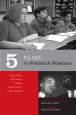
Five Films by Frederick Wiseman (2006)
Titicut Follies, High School, Welfare, High School II, Public Housing
Dir. Barry Keith Grant
Subject: Director > Frederick Wiseman

> On a related topic:
Feature Films 1961–1970 (1997)
American Film Institute Catalog of Motion Pictures Produced in the United States
Subject: On Films > Per period
Cinema '62 (2020)
The Greatest Year at the Movies
by Stephen Farber and Michael McClellan
Subject: History of Cinema

From El Dorado to Lost Horizons (2020)
Traditionalist Films in the Hollywood Renaissance, 1967-1972
by Ken Windrum
Subject: Countries > United States
The Bad Sixties (2019)
Hollywood Memories of the Counterculture, Antiwar, and Black Power Movements
Subject: Sociology

Invasion USA (2017)
Essays on Anti-Communist Movies of the 1950s and 1960s
Dir. David J. Hogan
Subject: Sociology
 Back
Back

