

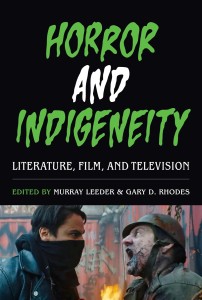
Horror and Indigeneity
Literature, Film, and Television
Edited by Murray Leeder and Gary D. Rhodes


 (0 vote)
Average rating:
| 0 | rating |  = We can do without = We can do without |
| 0 | rating |  = Good book = Good book |
| 0 | rating |  = Excellent book = Excellent book |
| 0 | rating |  = Unique / a reference = Unique / a reference |
Your rating: -
Book Presentation:
A collection of essays about Indigeneity and horror in cinema, literature, and beyond.
How did Indigeneity come to be horrifying? Think of the “Indian burial ground” trope, a staple of 1970s horror cinema, not to mention decades of Western films and fictions that made “savage Indians” the face of fear in popular culture. Can horror do something else in the hands of Indigenous people? Creators such as Eden Robinson and Jeff Barnaby have self-consciously turned to horror to tell new kinds of stories, stories that question who is a monster and what constitutes the monstrous.
Horror and Indigeneity explores representations of Indigenous people in settler horror texts and in the growing corpus of horror by Indigenous writers and filmmakers. Widely spanning time periods and media, the contributors to this edited volume address themes such as cannibalism, eco-horror, historical trauma, and contemporary antiracism as they relate to classical horror cinema and recent works such as The Dead Can’t Dance, Lovecraft Country, and Stephen Graham Jones’s The Only Good Indians. Also featuring interviews with Jones and director T. J. Cuthand, Horror and Indigeneity rethinks the terror of the Other in potent and provocactive terms.
About the authors:
Murray Leeder is an assistant lecturer in film and English at the University of Alberta. He is the author of Horror Film: A Critical Introduction and The Modern Supernatural and the Beginnings of Cinema.Gary D. Rhodes is a professor of media production at Oklahoma Baptist University, a filmmaker, and a poet. He is the author of Vampires in Silent Cinema and coeditor of Film by Design: The Art of the Movie Poster.
Press Reviews:
Horror and Indigeneity is a must-read for scholars, students, filmmakers, and horror fans everywhere. It makes a major contribution to the fast-growing field of Indigenous horror studies while providing context and meaning for authors, producers, practitioners, and audiences alike. Through fifteen fascinating chapters, this book explores the spectrum of Indigenous representation across time and genres, first unpacking the history of the tropes of the "uncivilized Native," the "Indian burial ground," and "the merciless Savage" as they have played out in literature, film, and television over more than a century, before delving into the trajectory of Indigenous counternarratives of colonialism-as-monster. Through interviews and chapters exploring the slashers, dramas, documentaries, mysteries, and thrillers that have featured spirits, mutants, zombies, windigos, ghosts, and other fearsome figures, this book unsettles the horror genre and answers the question: Who are the real savages we should fear?
-- Heather Igloliorte, coeditor of The Routledge Companion to Indigenous Art Histories in the United States and Canada
This ambitious edited volume makes a significant contribution to the interdisciplinary field of Indigenous studies and fills a gap in the scholarly study of horror films, novels, and television shows from the perspectives of other disciplines aligned with Indigenous studies. The coeditors pull all the threads together, and the accessibility of different chapters will make them useful in both undergraduate and graduate studies courses.
-- Cailín E. Murray, editor of Phantom Past, Indigenous Presence: Native Ghosts in North American Culture and History
Horror and Indigeneity is a significant contribution to horror studies, representing an important early step in introducing decolonial perspectives into the study of horror and providing a foundation upon which future scholars can build. As editors, Murray Leeder and Gary D. Rhodes do an excellent job framing the volume and establishing the need for it. The scope of the volume will make it an important scholarly resource that will undoubtedly appear on the shelves of many horror scholars.
-- Kendall R. Phillips, author of A Place of Darkness: The Rhetoric of Horror in Early American Cinema
> From the same authors:
Neglected Scorsese (2025)
Overlooked Films, Television Shows, and Commercials
Dir. Phillip Sipiora and Gary D. Rhodes
Subject: Director > Martin Scorsese
The Palgrave Encyclopedia of American Horror Film Shorts (2023)
1915–1976
by Gary D. Rhodes, David J. Hogan, Mark Martucci and Henry Nicolella
Becoming Dracula (2021)
The Early Years of Bela Lugosi, Volume Two
by Gary D. Rhodes and Bill Kaffenberger
Subject: Actor > Bela Lugosi
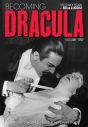
Becoming Dracula (2021)
The Early Years of Bela Lugosi - Volume One
by Gary D. Rhodes and Bill Kaffenberger
Subject: Actor > Bela Lugosi
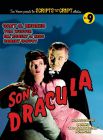
Son of Dracula (2019)
by Gary D. Rhodes, Tom Weaver and Robert J. Kiss
Subject: One Film > Son of Dracula
The Films of Budd Boetticher (2017)
Dir. Gary D. Rhodes and Robert Singer
Subject: Director > Budd Boetticher

No Traveler Returns (2012)
The Lost Years of Bela Lugosi
by Gary D. Rhodes and Bill Kaffenberger
Subject: Actor > Bela Lugosi
Stanley Kubrick (2007)
Essays on His Films and Legacy
Dir. Gary D. Rhodes
Subject: Director > Stanley Kubrick
Lugosi (2006)
His Life in Films, on Stage, and in the Hearts of Horror Lovers
Subject: Actor > Bela Lugosi
Docufictions (2005)
Essays on the Intersection of Documentary and Fictional Filmmaking
Dir. Gary D. Rhodes and John Parris Springer
Subject: Genre > Documentary
> On a related topic:
Ad Nauseam (2026)
Newsprint Nightmares from the '70s and '80s
Horror House Film (2026)
Possession, Obsession, Domination, Masculinity
Classic Monsters, Modern Art (2026)
20th Century Horror in 21st Century Illustration
The US-Mexico Borderlands in Contemporary Horror (2026)
Crossing the Boundary
Last Orgy by the Cemetery (2026)
A 'Video Nasties' Synopsis, Film By Shocking Film!
by David Kerekes and David Slater
 Back
Back