


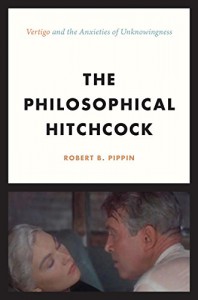
The Philosophical Hitchcock
Vertigo and the Anxieties of Unknowingness


 (0 vote)
Average rating:
| 0 | rating |  = We can do without = We can do without |
| 0 | rating |  = Good book = Good book |
| 0 | rating |  = Excellent book = Excellent book |
| 0 | rating |  = Unique / a reference = Unique / a reference |
Your rating: -
Book Presentation:
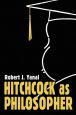
On the surface, The Philosophical Hitchcock: Vertigo and the Anxieties of Unknowingness, is a close reading of Alfred Hitchcock's 1958 masterpiece Vertigo. This, however, is a book by Robert B. Pippin, one of our most penetrating and creative philosophers, and so it is also much more. Even as he provides detailed readings of each scene in the film, and its story of obsession and fantasy, Pippin reflects more broadly on the modern world depicted in Hitchcock's films. Hitchcock's characters, Pippin shows us, repeatedly face problems and dangers rooted in our general failure to understand others--or even ourselves--very well, or to make effective use of what little we do understand. Vertigo, with its impersonations, deceptions, and fantasies, embodies a general, common struggle for mutual understanding in the late modern social world of ever more complex dependencies. By treating this problem through a filmed fictional narrative, rather than discursively, Pippin argues, Hitchcock is able to help us see the systematic and deep mutual misunderstanding and self-deceit that we are subject to when we try to establish the knowledge necessary for love, trust, and commitment, and what it might be to live in such a state of unknowingness.
A bold, brilliant exploration of one of the most admired works of cinema, The Philosophical Hitchcock will lead philosophers and cinephiles alike to a new appreciation of Vertigo and its meanings.
See the publisher website: University of Chicago Press
See Vertigo (1958) on IMDB ...
> From the same author:
Fatalism in American Film Noir (2013)
Some Cinematic Philosophy
Hollywood Westerns and American Myth (2012)
The Importance of Howard Hawks and John Ford for Political Philosophy
> On a related topic:

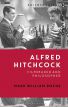
Cultural Theory in the Films of Alfred Hitchcock (2023)
Subject: Director > Alfred Hitchcock


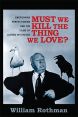
Must We Kill the Thing We Love? (2014)
Emersonian Perfectionism and the Films of Alfred Hitchcock
Subject: Director > Alfred Hitchcock
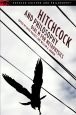
Hitchcock and Philosophy (2007)
Dial M for Metaphysics
Dir. David Baggett and William A. Drumin
Subject: Director > Alfred Hitchcock
 Back
Back

