


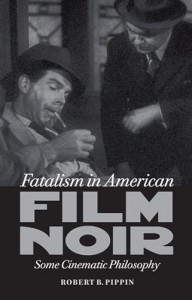
Fatalism in American Film Noir
Some Cinematic Philosophy


 (0 vote)
Average rating:
| 0 | rating |  = We can do without = We can do without |
| 0 | rating |  = Good book = Good book |
| 0 | rating |  = Excellent book = Excellent book |
| 0 | rating |  = Unique / a reference = Unique / a reference |
Your rating: -
Book Presentation:
The crime melodramas of the 1940s known now as film noir shared many formal and thematic elements, from unusual camera angles and lighting to moral ambiguity and femmes fatales. In this book Robert Pippin argues that many of these films also raise distinctly philosophical questions. Where most Hollywood films of that era featured reflective individuals living with purpose, taking action and effecting desired consequences, the typical noir protagonist deliberates and plans, only to be confronted by the irrelevance of such deliberation and by results that contrast sharply, often tragically, with his or her intentions or true commitments. Pippin shows how this terrible disconnect sheds light on one of the central issues in modern philosophy--the nature of human agency. How do we distinguish what people do from what merely happens to them? Looking at several film noirs--including close readings of three classics of the genre, Fritz Lang’s Scarlet Street, Orson Welles’s The Lady from Shanghai, and Jacques Tourneur’s Out of the Past--Pippin reveals the ways in which these works explore the declining credibility of individuals as causal centers of agency, and how we live with the acknowledgment of such limitations.
About the Author:
Robert B. Pippin is Evelyn Stefansson Nef Distinguished Service Professor in the John U. Nef Committee on Social Thought, the Department of Philosophy, and the College, at the University of Chicago. He is the author, most recently, of Hollywood Westerns and American Myth: The Importance of Howard Hawks and John Ford for Political Philosophy.
> From the same author:
The Philosophical Hitchcock (2019)
Vertigo and the Anxieties of Unknowingness
Hollywood Westerns and American Myth (2012)
The Importance of Howard Hawks and John Ford for Political Philosophy
> On a related topic:
The Dark Interval (2023)
Film Noir, Iconography, and Affect

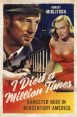
I Died a Million Times (2021)
Gangster Noir in Midcentury America

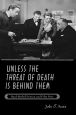
Unless the Threat of Death Is Behind Them (2008)
Hard-Boiled Fiction and Film Noir
 Back
Back