


Incorporating Images
Film and the Rival Arts

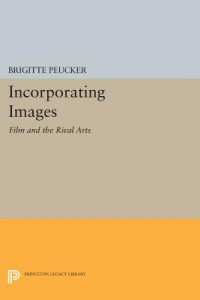

 (0 vote)
Moyenne des votes :
| 0 | vote |  = On peut s'en passer = On peut s'en passer |
| 0 | vote |  = Bon livre = Bon livre |
| 0 | vote |  = Excellent livre = Excellent livre |
| 0 | vote |  = Unique / une référence = Unique / une référence |
Votre vote : -
Description de l'ouvrage:
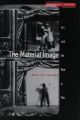
Film, a latecomer to the realm of artistic media, alludes to, absorbs, and undermines the discourses of the other arts--literature and painting especially--in order to carve out a position for itself among them. Exposing the anxiety in film's relation to its rival arts, Brigitte Peucker analyzes central issues involved in generic boundary crossing as they pertain to film and situates them in a theoretical framework. The figure of the human body takes center stage in Peucker's innovative study, for it is through this figure that the conjunction of literary and painterly discourses persistently articulates itself. It is through the human body, too, that film's consciousness of itself as a hybrid text and as a "machine for simulation" makes itself deeply felt.
In films ranging from Weimar cinema through Griffith, Hitchcock, and Greenaway, Peucker probes issues in aesthetics problematized by Diderot and Kleist, among others. She argues that the introduction of movement into visual representation occasioned by film brings with it an underlying tension suggestive of castration and death. Peucker goes on to demonstrate how the encounter between narrative and image is both gendered and sexualized, rendering film a "monstrous" hybrid. In a final section, she explores in specific cinematic texts the permeable boundary between the real and representation, suggesting how effects such as tableau vivant and trompe l'oeil figure sexuality and death.
Originally published in 1995.
The Princeton Legacy Library uses the latest print-on-demand technology to again make available previously out-of-print books from the distinguished backlist of Princeton University Press. These editions preserve the original texts of these important books while presenting them in durable paperback and hardcover editions. The goal of the Princeton Legacy Library is to vastly increase access to the rich scholarly heritage found in the thousands of books published by Princeton University Press since its founding in 1905.
Voir le site internet de l'éditeur Princeton University Press
> Du même auteur :
New Approaches to Ernst Lubitsch (2024)
A Light Touch
Dir. Brigitte Peucker et Ido Lewit
Sujet : Director > Ernst Lubitsch
A Companion to Rainer Werner Fassbinder (2012)
Dir. Brigitte Peucker
Sujet : Director > Rainer Werner Fassbinder
> Sur un thème proche :
Theorizing Film Through Contemporary Art (2020)
Expanding Cinema
Dir. Jill Murphy et Laura Rascaroli
Sujet : Theory
Screens and Illusionism (2024)
Alternative Teleologies of Mediation
Dir. Peter Bloom et Dominique Jullien
Sujet : Theory
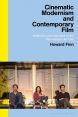
Cinematic Modernism and Contemporary Film (2024)
Aesthetics and Narrative in the International Art Film
de Howard Finn
Sujet : Theory
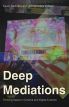
Deep Mediations (2021)
Thinking Space in Cinema and Digital Cultures
Dir. Karen Redrobe et Jeff Scheible
Sujet : Theory
The Oxford Handbook of New Audiovisual Aesthetics (2015)
Dir. John Richardson, Claudia Gorbman et Carol Vernallis
Sujet : Theory
 Retour

