


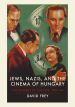
Hungarian Film 1929 - 1947
National Identity, Anti-Semitism and Popular Cinema



 (0 vote)
Average rating:
| 0 | rating |  = We can do without = We can do without |
| 0 | rating |  = Good book = Good book |
| 0 | rating |  = Excellent book = Excellent book |
| 0 | rating |  = Unique / a reference = Unique / a reference |
Your rating: -
Book Presentation:
What does it mean for someone or something to be Hungarian? That was the far-reaching question that people grappled with in Hungary in the wake of the losses and transformation brought by World War I. Because the period also saw the rise of cinema, audiences, filmmakers, critics, and officials often looked at films with an eye to that question, too: Did the Hungary seen on screen represent the Hungary they knew from everyday life? And—crucially—did the major role played by Jewish Hungarians in the film industry make the sector and its creations somehow Jewish rather than Hungarian? Jews, it was soon decided, could not really be Hungarian, and acts of Parliament soon barred them from taking major roles in cinema production. This book tells the troubled story of that period in Hungarian cinematic history, taking it up through World War II.
About the Author:
Gábor Gergely is a Leverhulme Early Career Fellow at the University of Manchester.
Press Reviews:
BAFTSS 2018 Best Monograph Runner-up. Comments by the panel: "The subtitle of the book strikes at the heart of Gergely’s concerns both as a critique of the cinema and as an appraisal of the gap in much of the extant academic literature. What is a real pleasure within the book, though, is the extent to which the author is keenly aware of the general ignorance around Hungarian culture for his mainly English-speaking readership, and as a history book more generally, the texts sits well alongside the style of cultural historians like Arthur Marwick. As such, this book speaks across disciplines and is truly enlightening."
> From the same author:
The Routledge Companion to European Cinema (2024)
Dir. Gábor Gergely and Susan Hayward

Foreign Devils (2013)
Exile and Host Nation in Hollywood's Golden Age
Subject: Countries > United States
> On a related topic:

Film Genres in Hungarian and Romanian Cinema (2021)
History, Theory, and Reception


The Haunted Present (2026)
Slavic Neo-Noir Cinema and Television
Dir. Elena Prokhorova, Alexander Prokhorov and Rimgaila Salys
Work, Ideology, and Film under Socialism in Romania (2025)
Studies in the Sociology of Film

Disintegration in Frames (2007)
Aesthetics and Ideology in the Yugoslav and Post-Yugoslav Cinema
by Pavle Levi
The Body in the Mirror (2016)
Shapes of History in Italian Cinema

 Back
Back

