


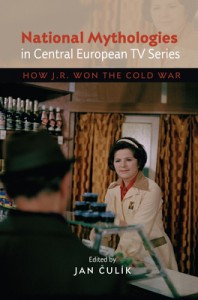
National Mythologies in Central European TV Series
How J.R. Won the Cold War
Edited by Jan Culik


 (0 vote)
Average rating:
| 0 | rating |  = We can do without = We can do without |
| 0 | rating |  = Good book = Good book |
| 0 | rating |  = Excellent book = Excellent book |
| 0 | rating |  = Unique / a reference = Unique / a reference |
Your rating: -
Book Presentation:
This is the first ever international comparative study of the mythologies which popular TV series in Czechoslovakia/Czech Republic, Hungary, Poland and Romania -- made before and after the fall of communism -- disseminate in their societies. Popular television broadcasting has had an enormous impact on the general public's beliefs and values, East and West. From the outset, the communist systems of Central and East Europe used entertainment television programming to instil the regimes' values in the viewer. And indeed popular television still exerts a major impact on these fairly homogeneous societies. Up to date research about current social values and factors in the formation of individual and collective identity has considerable strategic importance for decision making both in Britain and in the EU. If we are to understand how the populations of the Central and East European countries might react in the current relatively unstable political and economic situation, it is necessary to understand the indigenous political, social and cultural discourse in these countries. Comparison of samples of popular television from the 1970s, 1980s and 2000s provides strategically significant material about how these societies think and rationalise, and what their thinking is rooted in. The study proceeds from the premise that popular television series provide a fertile ground of investigation as mass media reflects and shapes social and cultural values.
> From the same author:

A Society in Distress (2012)
The Image of the Czech Republic in Contemporary Czech Feature Film
by Jan Culik
> On a related topic:
The Haunted Present (2026)
Slavic Neo-Noir Cinema and Television
Dir. Elena Prokhorova, Alexander Prokhorov and Rimgaila Salys
Work, Ideology, and Film under Socialism in Romania (2025)
Studies in the Sociology of Film
Hungarian Film 1929 - 1947 (2017)
National Identity, Anti-Semitism and Popular Cinema
Disintegration in Frames (2007)
Aesthetics and Ideology in the Yugoslav and Post-Yugoslav Cinema
by Pavle Levi

Cinema of Collaboration (2022)
DEFA Coproductions and International Exchange in Cold War Europe

Hollywood Behind the Wall (2005)
The Cinema of East Germany



Stories between Tears and Laughter (2024)
Popular Czech Cinema and Film Critics
Albanian Cinema Through the Fall of Communism (2023)
Silver Screens and Red Flags
 Back
Back

