


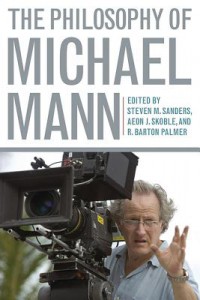
The Philosophy of Michael Mann
Edited by Steven Sanders, Aeon J. Skoble and R. Barton Palmer


 (0 vote)
Average rating:
| 0 | rating |  = We can do without = We can do without |
| 0 | rating |  = Good book = Good book |
| 0 | rating |  = Excellent book = Excellent book |
| 0 | rating |  = Unique / a reference = Unique / a reference |
Your rating: -
Book Presentation:
Known for restoring vitality and superior craftsmanship to the crime thriller, American filmmaker Michael Mann has long been regarded as a talented triple threat capable of moving effortlessly between television and feature films as a writer, director, and executive producer. His unique visual sense and thematic approach are evident in the Emmy Award-winning The Jericho Mile (1979), the cult favorite The Keep (1983), the American epic The Last of the Mohicans (1992), and the Academy Award-nominated The Insider (1999) as well as his most recent works—Ali (2001), Miami Vice (2006), and Public Enemies (2009).
The Philosophy of Michael Mann provides an up-to-date and comprehensive account of the work of this highly accomplished filmmaker, exploring the director's recognizable visual style and the various on-screen and philosophical elements he has tested in his thirty-five-year career. The essays in this wide-ranging book will appeal to fans of the revolutionary filmmaker and to philosophical scholars interested in the themes and conflicts that drive his movies.
About the authors:
Steven M. Sanders is emeritus erofessor of ehilosophy at Bridgewater State University. He is the editor of The Philosophy of Science Fiction Film and the coeditor of The Philosophy of TV Noir. Aeon J. Skoble is professor of philosophy at Bridgewater State University and a senior fellow at the Fraser Institute. He is the author or editor of numerous books, including Deleting the State: An Argument about Government and Reading Rasmussen and Den Uyl: Critical Essays on Norms of Liberty. R. Barton Palmer is the Calhoun Lemon Professor of Literature at Clemson University, where he also directs the film studies program. He is the coeditor of The Philosophy of Steven Soderbergh.
Press Reviews:
Although Mann is recognized, both popularly and critically, as a brilliant visual stylist who revitalized the American crime genre in the postmodern era, The Philosophy of Michael Mann is the first scholarly treatment of his oeuvre from a range of philosophical perspectives. Soundly refuting the notion of Mann as a manipulator of surfaces, this volume reveals the subtextual depths and diversity of his feature film career. -Linda Badley, Middle Tennessee State University
This is an extremely useful and diverse collection of philosophical musings on one of American cinema's most important contemporary auteurs. The Philosophy of Michael Mann features an impressive line-up of world-renowned film critics, philosophers, literary experts, and Mann scholars—all illuminating the eclectic range of concepts gestured to throughout his decades of work. A provocative, engaging read for students of cinema and philosophy, as well as fans of the director. If there remains any doubt that Mann is a legitimate auteur of the first order, this collection should put it to rest once and for all. -Jason Sperb, Northwestern University, author of Blossoms & Blood: Postmodern Media Culture and the Films of Paul Thomas Anderson
[The authors] have woven a complex collection of criticism and analysis into a cohesive and satisfying whole that expresses the multiplicity of Mann's oeuvre. [...] Achieved here, in this rather concise yet wholly expansive book, is something worthy of the attention of not only readers interested in the cinema of Michael Mann, but also those interested in philosophy, history, anthropology, and aesthetic theory. A great read. -Film Matters
The Philosophy of Michael Mann is a collection of well-thought-out essays from bright scholarly minds who breakdown their interpretative logic of one of American cinema's most important contemporary auteurs. It is worth a read. -Terry R. Wickham, award-winning writer, producer, and director of Devil's Five
See the publisher website: University Press of Kentucky
See the complete filmography of Michael Mann on the website: IMDB ...
> From the same authors:


Mervyn LeRoy Comes to Town (2025)
Dir. Murray Pomerance and R. Barton Palmer
Subject: Director > Mervyn LeRoy

The Literary Films of Richard Brooks (2024)
Dir. R. Barton Palmer and Homer B. Pettey
Subject: Director > Richard Brooks
Alfred Hitchcock and Film Noir (2024)
The Darker Side
Dir. R. Barton Palmer and Homer B. Pettey
Subject: Director > Alfred Hitchcock

Autism in Film and Television (2022)
On the Island
Dir. Murray Pomerance and R. Barton Palmer
Subject: Sociology
The Other Hollywood Renaissance (2020)
Dir. Dominic Lennard, R. Barton Palmer and Murray Pomerance
Subject: Countries > United States

Rule, Britannia! (2019)
The Biopic and British National Identity
Dir. Homer B. Pettey and R. Barton Palmer
Subject: Countries > Great Britain

French Literature on Screen (2019)
Dir. Homer B. Pettey and R. Barton Palmer
Subject: Technique > Adaptation
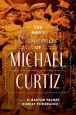
The Many Cinemas of Michael Curtiz (2018)
Dir. R. Barton Palmer and Murray Pomerance
Subject: Director > Michael Curtiz
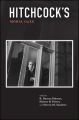
Hitchcock's Moral Gaze (2018)
Dir. R. Barton Palmer, Homer B. Pettey and Steven M. Sanders
Subject: Director > Alfred Hitchcock
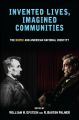
Invented Lives, Imagined Communities (2017)
The Biopic and American National Identity
Dir. William H. Epstein and R. Barton Palmer
Subject: Countries > United States
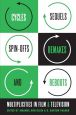
Cycles, Sequels, Spin-Offs, Remakes, and Reboots (2016)
Multiplicities in Film and Television
Dir. Amanda Ann Klein and R. Barton Palmer
Subject: Economics

Shot on Location (2016)
Postwar American Cinema and the Exploration of Real Place
Subject: Technique > Set Design
Thinking in the Dark (2015)
Cinema, Theory, Practice
Dir. Murray Pomerance and R. Barton Palmer
Subject: Theory
George Cukor (2015)
Hollywood Master
Dir. Murray Pomerance and R. Barton Palmer
Subject: Director > George Cukor
Michael Mann - Cinema and Television (2014)
Interviews, 1980-2012
by Steven Sanders and R. Barton Palmer
Subject: Director > Michael Mann
Hitchcock at the Source (2011)
The Auteur as Adapter
Dir. R. Barton Palmer and David Boyd
Subject: Director > Alfred Hitchcock

The Philosophy of Steven Soderbergh (2011)
Dir. R. Barton Palmer and Steven Sanders
Subject: Director > Steven Soderbergh
Hollywood's Tennessee (2009)
The Williams Films and Postwar America
by R. Barton Palmer and William Robert Bray
Subject: Others persons > Tennessee Williams
After Hitchcock (2006)
Influence, Imitation, And Intertextuality
Dir. David Boyd and R. Barton Palmer
Subject: Director > Alfred Hitchcock
Traditions in World Cinema (2006)
Dir. Linda Badley, R. Barton Palmer and Steven Jay Schneider
Traditions in World Cinema (2005)
Dir. Linda Badley, R. Barton Palmer and Steven Jay Schneider

Woody Allen and Philosophy (2004)
You Mean My Whole Fallacy Is Wrong?
Dir. Mark T. Conard and Aeon J. Skoble
Subject: Director > Woody Allen
Joseph L. Mankiewicz (2001)
Critical Essays and Guide to Resources With Annotated Bibliography and Filmography
by Cheryl Bray Lower and R. Barton Palmer
Subject: Director > Joseph L. Mankiewicz
The Simpsons and Philosophy (2001)
The D'oh! of Homer
Dir. William Irwin, Mark T. Conard and Aeon J. Skoble
Subject: One Film > The Simpsons (TV Series)
> On a related topic:
Blood in the Moonlight (2005)
Michael Mann and Information Age Cinema
Subject: Director > Michael Mann



Cloud (2025)
Between Paris and Tehran: Kiarostami/Corbin/Lacan
by Joan Copjec
Subject: Director > Abbas Kiarostami

Secret Violences (2024)
The Political Cinema of Michelangelo Antonioni, 1960-75
Subject: Director > Michelangelo Antonioni

István Szabó (2024)
Filmmaker of Existential Choices
by Susan Rubin Suleiman and Costica Bradatan
Subject: Director > István Szabó
Lars von Trier's Cinema (2023)
Excess, Evil, and the Prophetic Voice
by Rebecca Ver Straten-McSparran
Subject: Director > Lars von Trier
 Back
Back

