


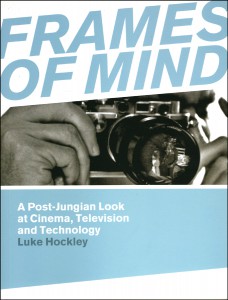
Frames of Mind
A Post-Jungian Look at Cinema, Television and Technology
de Luke Hockley


 (0 vote)
Moyenne des votes :
| 0 | vote |  = On peut s'en passer = On peut s'en passer |
| 0 | vote |  = Bon livre = Bon livre |
| 0 | vote |  = Excellent livre = Excellent livre |
| 0 | vote |  = Unique / une référence = Unique / une référence |
Votre vote : -
Description de l'ouvrage:
The eminent psychologist Carl Jung is best known for such indelible contributions to modern thought as the concept of the collective unconscious, but his wide-spread work can also be fruitfully employed to analyze popular culture. Frames of Mind offers an introduction to the world of Post-Jungian film and television studies, examining how Jung’s theories can heighten our understanding of everything from Chinatown and Star Trek to advertisements.
In this illuminating psychoanalysis of our media environment, Luke Hockley probes questions such as why we have genuine emotional responses to film events we know to be fictional, why we are compulsively driven to watch television, and how advertisers use unconscious motifs to persuade viewers. “A beautiful job! Hockley’s is a big screen approach, for he seeks to link Jungian and post-Jungian ideas about film with the sounds and images that flicker across everyone’s everyday experience. In this mixture of the formal and the informal, he performs an act of therapy for Jungian media criticism itself, rooting it (for its own good) in the popular and the ubiquitous. The process brings out aspects of Jung’s work on sexuality and the body that often get overlooked in academic circles.”—Andrew Samuels, Professor of Analytical Psychology, University of Essex
Revue de Presse:
“A beautiful job! Hockley’s is a big screen approach, for he seeks to link Jungian and post-Jungian ideas about film with the sounds and images that flicker across everyone’s everyday experience. In this mixture of the formal and the informal, he performs an act of therapy for Jungian media criticism itself, rooting it (for its own good) in the popular and the ubiquitous. The process brings out aspects of Jung’s work on sexuality and the body that often get overlooked in academic circles.”
Andrew Samuels, Professor of Analytical Psychology, University of Essex
> Du même auteur :
Jungian Film Studies (2016)
The essential guide
de Helena Bassil-Morozow et Luke Hockley
Sujet : Theory
Somatic Cinema (2013)
The relationship between body and screen - a Jungian perspective
de Luke Hockley
Sujet : Sociology
Jung and Film II (2011)
The Return: Further Post-Jungian Takes on the Moving Image
Dir. Christopher Hauke et Luke Hockley
Sujet : Film Analysis
House (2010)
The Wounded Healer on Television: Jungian and Post-Jungian Reflections
Dir. Luke Hockley et Leslie Gardner
Sujet : One Film > House (TV Series)
> Sur un thème proche :
Contemporary Screen Ethics (2025)
Absences, Identities, Belonging, Looking Anew
Dir. Lucy Bolton, David Martin-Jones et Robert Sinnerbrink
Sujet : Theory
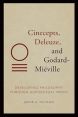
Cinecepts, Deleuze, and Godard-Miéville (2025)
Developing Philosophy through Audiovisual Media
Sujet : Theory
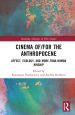
Cinema of/for the Anthropocene (2025)
Affect, Ecology, and More-Than-Human Kinship
Dir. Katarzyna Paszkiewicz et Andrea Ruthven
Sujet : Theory
 Retour

