


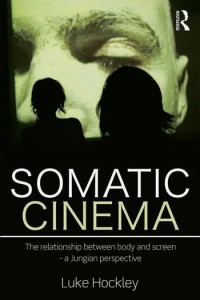
Somatic Cinema
The relationship between body and screen - a Jungian perspective
by Luke Hockley


 (0 vote)
Average rating:
| 0 | rating |  = We can do without = We can do without |
| 0 | rating |  = Good book = Good book |
| 0 | rating |  = Excellent book = Excellent book |
| 0 | rating |  = Unique / a reference = Unique / a reference |
Your rating: -
Book Presentation:
Films can hold personal psychological meanings that are often at odds with their narratives. Examining the intersections between mental health and the cinema, Somatic Cinema represents the cutting edge of film theory, evaluating the significance of this phenomenon both in therapy and in the everyday world.
Luke Hockley draws on the insights of phenomenological and Jungian film theory and applies them alongside more established psychoanalytic approaches. The result is to combine the idea of affective bodily experience with unconscious processes as a means to explore a new ontology of the cinema. The emphasis is therefore shifted from pure intellectual insight to greater inclusion of personally constructed meanings and experiences. Several key concepts are developed and explored throughout the book. These include:
The idea of the ‘Third Image’, occupying the intersubjective space between viewer and screen, and therapist and client
The concept of the Cinematic Frame (as opposed to the Film Frame), the container of the psychological relationship between viewer and screen
The use of the Cinematic Experience to encapsulate the somatic expression of unconscious effects that develop while a film is viewed and which are central to the creation of personal psychological meanings.
With a focus on examining why we develop a personal relationship with films, Somatic Cinema is ideal for academics and students of film studies, media studies and analytical psychology.
About the Author:
Luke Hockley is Professor of Media Analysis at the Research Institute for Media, Art and Design (RIMAD) at the University of Bedfordshire. He also works as an integrative psychotherapist in private practice in London and Bedfordshire. He co-edited Jung and Film II: The Return and House: The Wounded Healer on Television.
Press Reviews:
Drawing on Jung’s assertion that body and mind are indivisible, Luke Hockley develops a masterly analysis of the complex interactions between ritual, therapy and cinema. He introduces to this the concept of embodied affect, arguing that (as in therapy, so in the cinema) when body and mind are both impacted by feeling, the unconscious must be no less involved than consciousness. The resultant account presents an innovative theoretical frame within which to recognise the place of affect in cinema.
John Izod, Emeritus Professor of Film Analysis, University of Stirling
See the publisher website: Routledge
> From the same author:
The Routledge International Handbook of Jungian Film Studies (2019)
Dir. Luke Hockley
Subject: Sociology
Jungian Film Studies (2016)
The essential guide
by Helena Bassil-Morozow and Luke Hockley
Subject: Theory
Jung and Film II (2011)
The Return: Further Post-Jungian Takes on the Moving Image
Dir. Christopher Hauke and Luke Hockley
Subject: Film Analysis
House (2010)
The Wounded Healer on Television: Jungian and Post-Jungian Reflections
Dir. Luke Hockley and Leslie Gardner
Subject: One Film > House (TV Series)
Frames of Mind (2008)
A Post-Jungian Look at Cinema, Television and Technology
by Luke Hockley
Subject: Theory
> On a related topic:
The Cinema Ideal (2015)
An Introduction to Psychoanalytic Studies of the Film Spectator
Subject: Sociology
Cinema and Psyche in Analytical Psychology (2025)
Individuation as a Pathway to Love
by Joanna Dovalis and John Izod
Subject: Sociology
Post-Traumatic Stress Disorder in Film and Media (2025)
Digital Cultures and the Politics of Time and Memory
by Jason Lee
Subject: Sociology
Experiencing Epiphanies in Literature and Cinema (2024)
Arts and Humanities for Sustainable Well-being
Subject: Sociology
 Back
Back

