


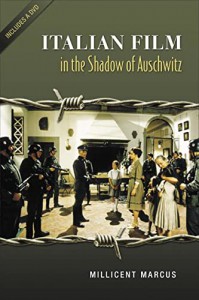
Italian Film in the Shadow of Auschwitz


 (0 vote)
Average rating:
| 0 | rating |  = We can do without = We can do without |
| 0 | rating |  = Good book = Good book |
| 0 | rating |  = Excellent book = Excellent book |
| 0 | rating |  = Unique / a reference = Unique / a reference |
Your rating: -
Book Presentation:
The last decade has witnessed an outpouring of Italian films that deal with Fascism, anti-Semitism and the Holocaust. This would appear to mark a distinct change from the postwar reluctance to represent such an infamous history. Roberto Benigni's popular Life is Beautiful (1997) is an obvious example, but there have been a number of other works that have not been exported that also attest to a distinct tendency within Italian domestic production to address the issue. Millicent Marcus's Italian Film in the Shadow of Auschwitz looks at this development, attributing the new acceptance not only to an international film sensation, but to a domestic cultural climate at once receptive to Holocaust representation, and ready to produce its own forms of historical testimony.
Throughout the book, Marcus brings a variety of perspectives - psychoanalytical, ideological, mass cultural - to bear on the question of how Italian filmmakers are confronting the Holocaust, and why now given the sparse output of Holocaust films produced in Italy from 1945 to the early 1990s. What emerges is a fascinating look at how film is being used to confront a particularly damning aspect of cultural history.
Marcus's study features in-depth analyses of five recent Italian films: Ricky Tognazzi's Canone inverso, Ettore Scola's Concorrenza sleale, Andrea and Antonio Frazzi's Il cielo cade, Alberto Negrin's Perlasca, and Ferzan Ozpetek's La finestra di fronte. As an added feature, the book includes a DVD of Scola's short film '43-'97, which has been unavailable outside of Italy until now.
About the Author:
Millicent Marcus is a professor of Italian Studies and Film & Media Studies at Yale University.
> From the same author:
After Fellini (2002)
National Cinema in the Postmodern Age
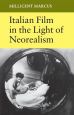
> On a related topic:
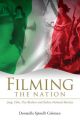
Filming the Nation (2010)
Jung, Film, Neo-Realism and Italian National Identity
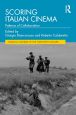
Scoring Italian Cinema (2025)
Patterns of Collaboration
Dir. Giorgio Biancorosso and Roberto Calabretto
Screening Religions in Italy (2019)
Contemporary Italian Cinema and Television in the Post-Secular Public Sphere
Dreamscapes in Italian Cinema (2019)
Dir. Francesco Pascuzzi and Bryan Cracchiolo
Masculinity and Italian Cinema (2014)
Sexual Politics, Social Conflict and Male Crisis in the 1970s
The Transatlantic Gaze (2014)
Italian Cinema, American Film
 Back
Back

