

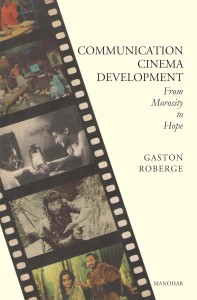
Communication Cinema Development
From Morosity to Hope


 (0 vote)
Average rating:
| 0 | rating |  = We can do without |
| 0 | rating |  = Good book |
| 0 | rating |  = Excellent book |
| 0 | rating |  = Unique / a reference |
Your rating: -
Book Presentation:
Communication and cinema shape development studies in India, linking films, discourse, and hope for change.
Communication departments, with cinema studies are being increas-ingly established in India. This book was written especially for the students of these departments. The book has three interrelated parts. Parts One and Two probe various aspects of communication and cinema, respectively, in the context of so-called development. Part Three exemplifies the arguments of Parts One and Two through analysis of films like the Heart Trilogy of Satyajit Ray, Ganasatru, Shakhaproshaka and Agantuk, two films from Bangladesh, Jesus '71, Beder Meye Josna, and City of Joy.
Cinema plays a vital role in the life of our people. Indian movie stars shine both on the silver screen and in golden politics, and the Indian masses enter the films they watch to step out the other side of the screen into their reality, programmed, as it were, by the dreams which the films gave them. There is need for a serious reflection on the link between communication, cinema and development.
Development is seen in this book as an international project that has little to offer to those most in need. After over forty years of development, on the eve of the year 2000, there are more jobless, poor, sick, and homeless than ever before. These are the facts, indeed the people, that confront us. We must see the limitations of development and create new, much more radical projects. For that, we need a lot of hope. This book seeks to arouse hope in the midst of an awareness of our failures. After all, hope can have no other context.
Table of Contents
• List of Plates 7
• Preface 11
• Acknowledgements 14
• Part One: COMMUNICATION AND DEVELOPMENT
• 1. The Need for Alternatives 17
• Part Two: COMMUNICATION
• 2. Communication is for Communion 25
• 3. The Right to Communicate 29
• 4. WHO says WHAT to WHOM in what CHANNEL with what EFFECT? And So? 33
• 5. Universal Education Died under Friendly Fire 38
• 6. A Classroom Countrywide 42
• 7. Calcutta Image, Mirage of Development 47
• 8. Not on Bread Alone, But on All Manners of Pictures 53
• 9. Fourteen Years of Rigorous TV Watching for Every Citizen 58
• 10. Rape! Rape! Rape! 62
• 11. AIDS Literacy 65
• 12. The Man/Woman Fault 70
• 13. Maidan Virtual 74
• 14. Disembodied Self and Virtual Sex 78
• 15. Ill Give You a Ring 82
• 16. Monologue on DialogueThe Fine Art of Conversation 86
• 17. Ego, My Brother 90
• Part Three: CINEMA
• 18. The Invention of the Cinema 97
• 19. Cinema Awareness 103
• 20. India: From Cinema to Television Awareness 109
• 21. Innocent Pleasures in the Dark 115
• 22. Maligned, Fleeced, Yet Beloved: Cinema 119
• 23. Hundred Years of Film Theory: A Panoramic View 123
• 24. Happy Centenary Feast Indian Cinema! May You Rest in Peace 130
• 25. On Manikdas 1994 Birthday 133
• 26. A Film Festival, What For and For Whom? 136
• 27. Film Criticism 139
• 28. The Documentary Film as a Voice of Dissent? 142
• 29. Film Scholarship 146
• 30. A Film Industry for West Bengal 151
• Part Four: CINEMA AND DEVELOPMENT
• 31. Jesus 71: A Girl, Little and Mute, has Learnt to Play the Flute . . . 157
• 32. Beder Meye Josna: The Girl Who had Three Fathers 166
• 33. City of Joy: Fantasy of a Wounded Psyche 170
• 34. Ganashatru: Straight from the Heart 174
• 35. Shakha Proshahha: The Heartbeat of Time 178
• 36. Agantuk: The Cave of the Heart 182
• Part Five: CINEMA AND TELEVISION
• 37. Indian Cinema meets Television: A Close Encounter of a Strange Kind
• ENVOI
• 38. From Morosity to Hope
• Name Index 217
See the publisher website: Manohar Books
> On a related topic:
Bollywood's Corporeal Turn (2026)
Aesthetic Response and Diasporic Memory
by Vijay Mishra and Sudesh Mishra
Muslim Identity in Hindi Cinema (2025)
Poetics and Politics of Genre and Representation

Ways of Remembering (2024)
Law, Cinema and Collective Memory in the New India

Visual Anthropology of Indian Films (2024)
Religious Communities and Cultural Traditions in Bollywood and Beyond
Dir. Pankaj Jain
Postcolonial Bollywood and Muslim Identity (2024)
Production, Representation, and Reception
Indian Cinema and Human Rights (2024)
An Intersectional Tale
Dir. Adam Dubin, Ruchira Goswami and Ishita Sharma
 Back