


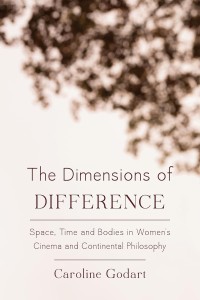
The Dimensions of Difference
Space, Time and Bodies in Women's Cinema and Continental Philosophy


 (0 vote)
Average rating:
| 0 | rating |  = We can do without = We can do without |
| 0 | rating |  = Good book = Good book |
| 0 | rating |  = Excellent book = Excellent book |
| 0 | rating |  = Unique / a reference = Unique / a reference |
Your rating: -
Book Presentation:
The Dimensions of Difference departs from traditional takes on feminist film criticism, and in particular from the psychoanalytical focus on the gaze, to examine the question of sexual difference through three axes: space, time, and bodies. These are some of the most fundamental elements of cinema, which deploys the bodies of actors through space and time, for instance, through camerawork and editing.
While this approach may not at first sight seem to be related to questions of gender and sexuality, Caroline Godart demonstrates its relevance to feminist film studies by weaving together careful analyses of space, time, and bodies in women’s cinema with close readings of the same concepts in the works of three philosophers: Luce Irigaray, Henri Bergson, and Gilles Deleuze. The book investigates how certain films generate a cinematic experience of sexual difference, and frames this analysis within a careful philosophical inquiry into the notion of alterity itself. These tools provide fruitful resources for feminist inquiry, giving insights into sexual difference as it operates within film aesthetics and, beyond cinema, in the world at large. The result is a compelling reflection on feminism, film form, and continental philosophy.
About the Author:
Caroline Godart is a Scientific Collaborator at the Université Libre de Bruxelles.
Press Reviews:
"The Dimensions of Difference is like a breath of fresh air in contemporary film theory. Caroline Godart thinks hard about what movies do, and how they affect us. Her book offers us both a series of close readings of major films by currently active women directors, and a sustained meditation on how cinema reworks, and enriches, our fundamental experiences of time, space, and embodiment." ―Steven Shaviro, emeritus professor of English, Wayne State University
"In this beautifully written and thoughtful interrogation of the constitution of space, time and bodies through sexual violence, Godart represents a new orientation in feminist film theory and analysis; one attuned to questions of affect, energy and sexuality as they link and unlink different bodies, providing a way of understanding cinema as an opening up of new relations between sexes, races, classes and empires. A moving and astute intervention into film theory and feminist philosophy." ―Elizabeth Grosz, Jean Fox O'Barr Women's Studies Professor, Duke University
> On a related topic:


From Bananas to Buttocks (2007)
The Latina Body in Popular Film and Culture
Dir. Myra Mendible
Subject: Sociology

Cinema's Baroque Flesh (2016)
Film, phenomenology and the art of entanglement
by Saige Walton
Subject: Theory

Film and Female Consciousness (2011)
Irigaray, Cinema and Thinking Women
by Lucy Bolton
Subject: Sociology

Terrors of the Flesh (2020)
The Philosophy of Body Horror in Film

Comedy Incarnate (2007)
Buster Keaton, Physical Humor, and Bodily Coping
by Noel Carroll
Subject: Director > Buster Keaton
 Back
Back

