


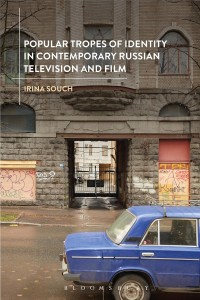
Popular Tropes of Identity in Contemporary Russian Television and Film
by Irina Souch


 (0 vote)
Average rating:
| 0 | rating |  = We can do without = We can do without |
| 0 | rating |  = Good book = Good book |
| 0 | rating |  = Excellent book = Excellent book |
| 0 | rating |  = Unique / a reference = Unique / a reference |
Your rating: -
Book Presentation:
This book is an exploration of the changes in Russian cultural identity in the twenty years after the fall of the Soviet state. Through close readings of a select number of contemporary Russian films and television series, Irina Souch investigates how a variety of popular cultural tropes ranging from the patriarchal family to the country idyll survived the demise of Communism and maintained their power to inform the Russian people’s self-image. She shows how these tropes continue to define attitudes towards political authority, economic disparity, ethnic and cultural difference, generational relations and gender. The author also introduces theories of identity developed in Russia at the same time, enabling these works to act as sites of productive dialogue with the more familiar discourses of Western scholarship.
About the Author:
Irina Souch is Lecturer in Literary and Cultural Analysis at the University of Amsterdam, The Netherlands.
Press Reviews:
"Parents and children. Us and them. Families in need of repair. Irina Souch analyzes these societal constructions (and more) through case studies of recent Russian popular films and television serials. By exploring the ways that post-Soviet culture has wrestled with individual, group, and familial identities, Souch persuasively demonstrates how contemporary Russianness is constructed through narratives that interpret the past while also reworking popular cultural tropes. Souch illustrates how television shows and films have played important role in the creation of new Russian myths of brotherhood, patriarchal authority, enemies, and family life." ― Stephen M. Norris, Professor of History, Miami University (OH), USA
> On a related topic:
Cinemasaurus (2020)
Russian Film in Contemporary Context
Dir. Nancy Condee, Alexander Prokhorov and Elena Prokhorova
Subject: Countries > Russia / USSR
Conspiracy Culture (2020)
Post-Soviet Paranoia and the Russian Imagination
Subject: Countries > Russia / USSR

Pride and Panic (2007)
Russian Imagination of the West in Post-Soviet Film
Subject: Countries > Russia / USSR
Revolt of the Filmmakers (2000)
The Struggle for Artistic Autonomy and the Fall of the Soviet Film Industry
Subject: Countries > Russia / USSR
Early Cinema in Russia (1998)
and Its Cultural Reception
by Yuri Tsivian
Subject: Countries > Russia / USSR

Postcommunist Film - Russia, Eastern Europe and World Culture (2013)
Moving Images of Postcommunism
Dir. Lars Kristensen
Subject: Countries > Russia / USSR
Russian Critics on the Cinema of Glasnost (1994)
Dir. Michael Brashinsky, Andrew Horton and William Rothman
Subject: Countries > Russia / USSR

Glasnost-Soviet Cinema Responds (1991)
by Nicholas Galichenko and Robert Allington
Subject: Countries > Russia / USSR
Memory Politics in Contemporary Russia (2020)
Television, Cinema and the State
Subject: Countries > Russia / USSR

 Back
Back

