


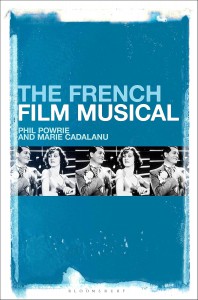
The French Film Musical
de Phil Powrie et Marie Cadalanu


 (0 vote)
Moyenne des votes :
| 0 | vote |  = On peut s'en passer = On peut s'en passer |
| 0 | vote |  = Bon livre = Bon livre |
| 0 | vote |  = Excellent livre = Excellent livre |
| 0 | vote |  = Unique / une référence = Unique / une référence |
Votre vote : -
Description de l'ouvrage:
Like many national cinemas, the French cinema has a rich tradition of film musicals beginning with the advent of sound to the present. This is the first book to chart the development of the French film musical. The French film musical is remarkable for its breadth and variety since the 1930s; although it flirts with the Hollywood musical in the 1930s and again in the 1950s, it has very distinctive forms rooted in the traditions of French chanson. Defining it broadly as films attracting audiences principally because of musical performances, often by well-known singers, Phil Powrie and Marie Cadalanu show how the genre absorbs two very different traditions with the advent of sound: European operetta and French chanson inflected by American jazz (1930-1950). As the genre matures, operetta develops into big-budget spectaculars with popular tenors, and revue films also showcase major singers in this period (1940-1960). Both sub-genres collapse with the advent of rock n roll, leading to a period of experimentation during the New Wave (1960-1990). The contemporary period since 1995 renews the genre, returning nostalgically both to the genre’s origins in the 1930s, and to the musicals of Jacques Demy, but also hybridising with other genres, such as the biopic and the documentary.
À propos des auteurs :
Phil Powrie is Emeritus Professor of Cinema Studies at the University of Surrey, UK. He is Chair of the British Association for Film, Television and Screen Studies and Chief General Editor of Studies in French Cinema.Marie Cadalanu is an independent researcher working as a teacher in a lycée in the Paris, France area.
Revue de Presse:
"Phil Powrie and Marie Cadalanu's book categorically disproves the cliché about French cinema having no musical tradition, with the one exception of Jacques Demy. In this ground-breaking volume, the authors reveal the extraordinary wealth and diversity of the musical tradition in French cinema since the coming of sound. Encompassing popular and auteur film, they demonstrate that, if there is not one 'musical genre' in France, there are myriad ways in which French film interacts with a wide range of cultural traditions, from cabaret, music-hall, chanson réaliste, operetta and opera to jazz bands and pop music, in an unbroken line from René Clair to François Ozon and Christophe Honoré, via Josephine Baker, Charles Trenet, Edith Piaf and Johnny Hallyday." ―Ginette Vincendeau, Professor in Film Studies, King's College London, UK
"Powrie and Cadalanu excavate the vibrant and varied tradition of the French film musical from the early sound musicals of René Clair to the recent nostalgia-inflected revival of the form. The authors illuminate the genre's iconic performers, Edith Piaf and Josephine Baker, but weave fresh figures into the story, notably fou chantant Charles Trenet, crooners Tino Rossi, Luis Mariano, and Georges Guétary, and big band powerhouse Ray Ventura and his Orchestra. Especially welcome is the information on the French film musical's production contexts from the 1930s through the 1950s, when the genre embraced jazz, big band, and operetta. The authors rightly identify the musicals of Jacques Demy as a turning point from popular to auteur-inflected work and provide welcome attention to the musicals of Godard, Varda, Akerman, and Resnais. Wisely avoiding the argument that the French film musical died with the birth of yéyé and youth culture, the authors instead reveal the never-ending transformation of the genre, emphasizing its nostalgia for community and its productive recycling of earlier forms of entertainment." ―Kelley Conway, Communication Arts Partners Professor, University of Wisconsin-Madison, USA
> Des mêmes auteurs :
When Music Takes Over in Film (2023)
Dir. Anna K. Windisch, Claus Tieber et Phil Powrie
Bicultural Literature and Film in French and English (2019)
Dir. Peter L. Barta et Phil Powrie
Sujet : Film Analysis
Pierre Batcheff and Stardom in 1920s French Cinema (2009)
de Phil Powrie et Eric Rebillard
Sujet : Actor > Pierre Batcheff
Composing for the Screen in Germany and the USSR (2007)
Cultural Politics and Propaganda
Dir. Robynn J. Stilwell et Phil Powrie
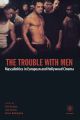
The Trouble with Men (2005)
Masculinities in European and Hollywood Cinema
Dir. Phil Powrie, Ann Davies et Bruce Babington
Sujet : Sociology
> Sur un thème proche :
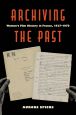
Archiving the Past (2026)
Women's Film History in France, 1927–1978
Catherine Malabou and Contemporary French Literature and Film (2026)
Witnessing Plasticity
Mixed Feelings in France (2025)
White Femininity and Métissage in French Multicultural Comedy
Nouvelles Femmes (2025)
Modern Women of the French New Wave and Their Enduring Contribution to Cinema
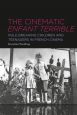
The Cinematic Enfant Terrible (2025)
Rule Breaking Children and Teenagers in French Cinema

Looking Beyond Neoliberalism (2024)
French and Francophone Belgian Cinema and the Crisis
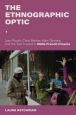
The Ethnographic Optic (2024)
Jean Rouch, Chris Marker, Alain Resnais, and the Turn Inward in 1960s French Cinema
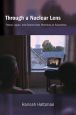
Through a Nuclear Lens (2024)
France, Japan, and Cinema from Hiroshima to Fukushima
 Retour

