

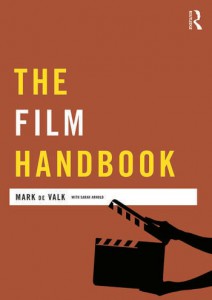
The Film Handbook
by Mark de Valk and Sarah Arnold


 (0 vote)
Average rating:
| 0 | rating |  = We can do without = We can do without |
| 0 | rating |  = Good book = Good book |
| 0 | rating |  = Excellent book = Excellent book |
| 0 | rating |  = Unique / a reference = Unique / a reference |
Your rating: -
Book Presentation:
The Film Handbook examines the current state of filmmaking and how film language, technique and aesthetics are being utilised for today’s ‘digital film’ productions. It reflects on how critical analysis’ of film underpins practice and story, and how developing an autonomous ‘vision’ will best aid student creativity. The Film Handbook offers practical guidance on a range of traditional and independent ‘guerrilla’ film production methods, from developing script ideas and the logistics of planning the shoot to cinematography, sound and directing practices. Film professionals share advice of their creative and practical experiences shooting both on digital and film forms.
The Film Handbook relates theory to the filmmaking process and includes:
• documentary, narrative and experimental forms, including deliberations on ‘reading the screen’, genre, mise-en-scène, montage, and sound design
• new technologies of film production and independent distribution, digital and multi-film formats utilised for indie filmmakers and professional dramas, sound design and music
• the short film form, theories of transgressive and independent ‘guerrilla’ filmmaking, the avant-garde and experimental as a means of creative expression
• preparing to work in the film industry, development of specialisms as director, producer, cinematographer, editor, and the presentation of creative work.
About the authors:
Dr. Mark de Valk is Senior Lecturer in Film & Television Studies at Southampton Solent University. He specialises in guerrilla/indie-filmmaking processes and continues to produce, direct and write productions in documentary, drama, and experimental formats. Dr. Sarah Arnold is Lecturer in Film & Digital Media at University College Falmouth and is author of Maternal Horror Film: Melodrama and Motherhood (2013).
See the publisher website: Routledge
> From the same authors:
> On a related topic:
The Digital Filmmaking Handbook (2021)
by Sonja Schenk and Ben Long
Subject: Technique > All techniques
 Back
Back

