


Understanding Bollywood
The Grammar of Hindi Cinema
de Ulka Anjaria

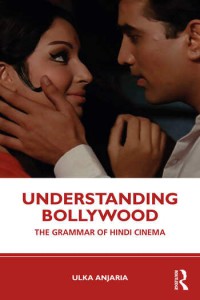

 (0 vote)
Moyenne des votes :
| 0 | vote |  = On peut s'en passer = On peut s'en passer |
| 0 | vote |  = Bon livre = Bon livre |
| 0 | vote |  = Excellent livre = Excellent livre |
| 0 | vote |  = Unique / une référence = Unique / une référence |
Votre vote : -
Description de l'ouvrage:
This book offers an introduction to popular Hindi cinema, a genre that has a massive fan base but is often misunderstood by critics, and provides insight on topics of political and social significance.
Arguing that Bollywood films are not realist representations of society or expressions of conservative ideology but mediated texts that need to be read for their formulaic and melodramatic qualities and for their pleasurable features like bright costumes, catchy music, and sophisticated choreography, the book interprets Bollywood films as complex considerations on the state of the nation that push the boundaries of normative gender and sexuality. The book provides a careful account of Bollywood’s constitutive components: its moral structure, its different forms of love, its use of song and dance, its visual style, and its embrace of cinephilia. Arguing that these five elements form the core of Bollywood cinema, the book investigates a range of films from 1947 to the present in order to show how films use and innovate formulaic structures to tell a wide range of stories that reflect changing times. The book ends with some considerations on recent changes in Bollywood cinema, suggesting that despite globalization the future of Bollywood remains promising.
By presenting Bollywood cinema through an interdisciplinary lens, the book reaches beyond film studies departments and will be useful for those teaching and studying Bollywood in English, sociology, anthropology, Asian studies, and cultural studies classes.
À propos de l'auteur :
Ulka Anjaria is Professor of English at Brandeis University, where she writes and teaches on South Asian literature and film. She is the author of Realism in the Twentieth-Century Indian Novel: Colonial Difference and Literary Form (2012) and Reading India Now: Contemporary Formations in Literature and Popular Culture (2019), and is the editor of A History of the Indian Novel in English (2015).
> Sur un thème proche :
Muslim Identity in Hindi Cinema (2025)
Poetics and Politics of Genre and Representation
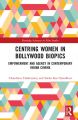
Centring Women in Bollywood Biopics (2024)
Empowerment and Agency in Contemporary Indian Cinema
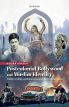
Postcolonial Bollywood and Muslim Identity (2024)
Production, Representation, and Reception
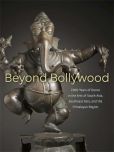
Beyond Bollywood (2022)
2000 Years of Dance in the Arts of South Asia, Southeast Asia, and the Himalayan Region
Dir. Forrest McGill
Bollywood's New Woman (2021)
Liberalization, Liberation, and Contested Bodies
Dir. Megha Anwer et Anupama Arora
 Retour

