


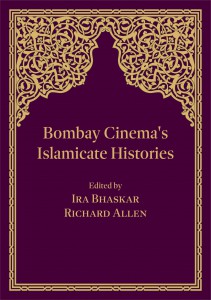
Bombay Cinema's Islamicate Histories
by Ira Bhaskar and Richard Allen


 (0 vote)
Average rating:
| 0 | rating |  = We can do without = We can do without |
| 0 | rating |  = Good book = Good book |
| 0 | rating |  = Excellent book = Excellent book |
| 0 | rating |  = Unique / a reference = Unique / a reference |
Your rating: -
Book Presentation:
An engaging account of the history and influence of Muslim cultures on Bombay cinema.
Following Marshal Hodgson, the term “Islamicate” is used to distinguish the cultural forms associated with Islam from the religion itself. The term is especially useful in South Asia where Muslim cultures have commingled with other local cultures over a millennium to form a rich vein of syncretic aesthetic expression. Comprised of fourteen essays written by major scholars, this collection presents an engaging account of the history and influence of cultural Islam on Bombay cinema. The book charts the roots of South Asian Muslim cultures and the precursors of Bombay cinema’s Islamicate idioms in the Urdu Parsi Theatre; the courtesan cultures of Lucknow; the literary, musical, and performance traditions of north India; the traditions of miniature painting; and various modes of Perso-Arabic story-telling. Published at a time of acute crisis in the perception and understanding of Islam, this book demonstrates how Muslim and Hindu cultures in India are inextricably entwined.
Press Reviews:
“Bombay Cinema’s Islamicate Histories, edited by Ira Bhaskar and Richard Allen, highlights the centrality of Islam, Muslims, and ‘Islamicate’ forms and aesthetics in the history of the film industry in Bombay. In doing so, it not only reveals overlooked cinematic pasts, it also effectively demonstrates that modern Indian history is inextricable from the history of Islam. . . . Its novelty is due to the breadth of the contributions and their varied methodological and disciplinary perspectives. The editors seek to tie these contributions together not as a singular narrative, but as a series of intersecting interventions. . . . It is a significant contribution to the scholarship, not only for the ways that it resists contemporary Hindu nationalist narratives, but also because it highlights the potential intersections in multiple contemporary trends in the study of Islam, Muslims, and the Islamicate in South Asian film.”
Journal of Religion & Film
"A sense of corrective readings of not just Bombay cinema’s film history but of larger art history of South Asia informs these chapters. Such an exercise in contributing to the larger idea of Indian identity with the help of cinema will largely be welcomed for its weaving together of form and sociopolitical conditions that influence form. This indeed is the way art history can be envisioned to inspire film history – breaking it free from isolated formal-chronological treatment of evolution of cinema while giving it definitive prompts to explore the sociopolitical symptoms and consequences of changes in its form. [...] The volume will be of immense interest to scholars of Bollywood as examples of how to do history of the art of film keeping complex factors such as form and identity at the center of inquiry."
Soni Wadhwa | Studies in South Asian Film & Media
"This collection shows how Islamicate cultural forms have been absorbed so fully into Bombay cinema and Bollywood film that it is no longer apparent where certain influences have come from. Each essay unweaves a piece of the complicated tapestry that is Indian society today and it makes a strong and powerful statement: that the history of Islam in India cannot be erased or seen as antithetical to the core identity of the nation without destroying the nation itself."
Aamera Jiwaji | AwaaZ Magazine
> From the same authors:
Hitchcock Annual 17 (2011)
Dir. Sidney Gottlieb and Richard Allen
Subject: Director > Alfred Hitchcock
The Hitchcock Annual Anthology (2009)
Selected Essays from Volumes 10–15
Dir. Sidney Gottlieb and Richard Allen
Subject: Director > Alfred Hitchcock
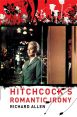

Hitchcock (2003)
Past and Future
Dir. Richard Allen and Sam Ishii-Gonzales
Subject: Director > Alfred Hitchcock
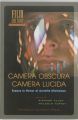
Camera Obscura, Camera Lucida (2003)
Essays in Honor of Annette Michelson
by Malcolm Turvey and Richard Allen
Subject: Theory
> On a related topic:
Postcolonial Bollywood and Muslim Identity (2024)
Production, Representation, and Reception
Muslim Identity in Hindi Cinema (2025)
Poetics and Politics of Genre and Representation
Centring Women in Bollywood Biopics (2024)
Empowerment and Agency in Contemporary Indian Cinema
Beyond Bollywood (2022)
2000 Years of Dance in the Arts of South Asia, Southeast Asia, and the Himalayan Region
Dir. Forrest McGill
Bollywood's New Woman (2021)
Liberalization, Liberation, and Contested Bodies
Dir. Megha Anwer and Anupama Arora
 Back
Back

