

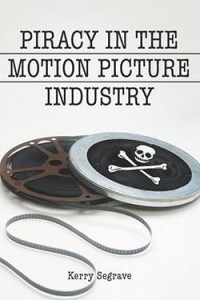
Piracy in the Motion Picture Industry


 (0 vote)
Moyenne des votes :
| 0 | vote |  = On peut s'en passer = On peut s'en passer |
| 0 | vote |  = Bon livre = Bon livre |
| 0 | vote |  = Excellent livre = Excellent livre |
| 0 | vote |  = Unique / une référence = Unique / une référence |
Votre vote : -
Description de l'ouvrage:
Film piracy began almost immediately after the birth of the film industry. Initially it was a within-the-industry phenomenon as studios stole from each other. As the industry grew and more money was involved, outsiders became more interested in piracy. Stolen material made its way offshore since detection was less likely. Hollywood’s major film studios vigorously pursued pirates and had the situation fairly well under control by the middle 1970s—not eliminated but reduced to a low level—until videocassettes arrived.
This work begins with a discussion of some of the earliest cases of piracy in vaudeville. It then considers how the problem continued to grow exacerbated by the lack of legal resource available to performers, and the ways film exhibitors cheated the film distributors and companies and the measures that the distributors and companies took to prevent piracy over the years.
Also examined are the practices of American theater owners who tried to cheat Hollywood, especially through the practice known as bicycling—extra, unpaid for screenings of a legitimately held film—and altering paperwork to reduce the money owed to distributors on films screened on percentage contracts. Also examined, to a lesser degree, are Hollywood’s own efforts to cheat, including the disregard of copyrights held by others.
À propos de l'auteur :
Cultural historian Kerry Segrave is the author of dozens of books on such diverse topics as drive-in theaters, lie detectors, jukeboxes, smoking, shoplifting and ticket-scalping. He lives in British Columbia.
Revue de Presse:
"comprehensively researched…full of out-of-the ordinary facts…a well of information"—Film & History; "this is important reading"—Communication Booknotes Quarterly.
> Du même auteur :
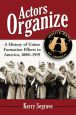
Actors Organize (2007)
A History of Union Formation Efforts in America, 1880–1919
Sujet : Jobs and Trainings
> Sur un thème proche :
Lost in the Stream (2025)
How Algorithms Redefined the Way Movies Are Made and Watched
de Jeff Rauseo
Sujet : Economics

DVD, Blu-ray and Beyond (2017)
Navigating Formats and Platforms within Media Consumption
Dir. Jonathan Wroot et Andy Willis
Sujet : Economics
Who Makes the Franchise? (2022)
Essays on Fandom and Wilderness Texts in Popular Media
Dir. Rhonda Knight et Donald Quist
Sujet : Sociology

 Retour