


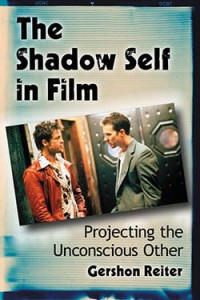
The Shadow Self in Film
Projecting the Unconscious Other


 (0 vote)
Moyenne des votes :
| 0 | vote |  = On peut s'en passer = On peut s'en passer |
| 0 | vote |  = Bon livre = Bon livre |
| 0 | vote |  = Excellent livre = Excellent livre |
| 0 | vote |  = Unique / une référence = Unique / une référence |
Votre vote : -
Description de l'ouvrage:
This book examines 13 movies that deal with the protagonist and his projected “other.” The cinematic Other is interpreted as an unconscious personality, a denied part of the protagonist that appears in his life as a shadowy menace who won’t go away. Devoting a chapter to each movie, the book starts with Mamoulian’s Dr. Jekyll and Mr. Hyde and three cinematic pairs: two Hitchcock films, Shadow of a Doubt and Strangers on a Train; two versions of Cape Fear, J. Lee Thompson’s 1962 original and Martin Scorsese’s 1991 remake; and a pair of Clint Eastwood films, In the Line of Fire and Blood Work. The book then examines Something Wild, Sea of Love, Fight Club, Desperately Seeking Susan, Apocalypse Now and The Lives of Others. Overall the book aims to show how movies envision the unconscious Other we all too often project on other people.
À propos de l'auteur :
Former film and music teacher Gershon Reiter lives in Israel.
> Du même auteur :
> Sur un thème proche :

The Self and its Shadows (2016)
A Book of Essays on Individuality as Negation in Philosophy and the Arts
Sujet : Theory
Freud/Lynch (2022)
Behind the Curtain
Dir. Jamie Ruers et Stefan Marianski
Sujet : Director > David Lynch
Hollywood Westerns and American Myth (2012)
The Importance of Howard Hawks and John Ford for Political Philosophy
 Retour

