


Queer Mexico
Cinema and Television Since 2000

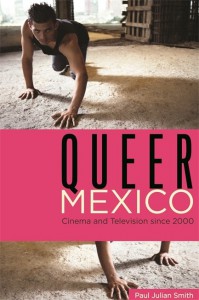

 (0 vote)
Average rating:
| 0 | rating |  = We can do without = We can do without |
| 0 | rating |  = Good book = Good book |
| 0 | rating |  = Excellent book = Excellent book |
| 0 | rating |  = Unique / a reference = Unique / a reference |
Your rating: -
Book Presentation:
Explores the rich and varied LGBT cinema and television of Mexico since the new millennium.
Queer Mexico: Cinema and Television since 2000 provides critical analysis of both mainstream and independent audiovisual works, many of them little known, produced in Mexico since the turn of the twenty-first century. In the book, author Paul Julian Smith aims to tease out the symbiotic relationship between culture and queerness in Mexico. Smith begins with the year 2000 because of the political shift that happened within the government—the Institutional Revolutionary Party (PRI) was voted out of national office after over seventy years in power. Judicial and social changes for LGBT Mexicans came in the wake of what was known at the time as simply "the change" ("el cambio") at the start of the millennium, bringing about an increased visibility and acknowledgment of the LGBT community.
Divided into five chapters, Queer Mexico demonstrates the diversity of both representation and production processes in the Mexican film and television industry. It attempts also to reconstruct a queer cultural field for Mexico that incorporates multiple genres and techniques. The first chapter looks at LGBT festivals, porn production, and a web-distributed youth drama, claimed by its makers to be the first wholly gay series made in Mexico. The second chapter examines selected features and shorts by Mexico's sole internationally distributed art house director, Julián Hernández. The third chapter explores the rising genre of documentary on transgender themes. The fourth chapter charts the growing trend of a gay, lesbian, or trans-focused mainstream cinema. The final chapter addresses the rich and diverse history of queer representation in Mexico's dominant television genre and, arguably, national narrative: the telenovela. The book also includes an extensive interview with gay auteur Julián Hernández.
The first book to come out of the Queer Screens series, Queer Mexico is a groundbreaking monograph for anyone interested in media or LGBT studies, especially as it relates to the culture of Latin America.
About the Author:
Paul Julian Smith is distinguished professor at the Graduate Center, City University of New York. He is the author of nineteen books, including Mexican Screen Fiction: Between Cinema and Television, Amores Perros, and Desire Unlimited: The Cinema of Pedro Almodóvar. He was a juror at the Morelia and San Sebastián International Film Festivals and is a columnist at Film Quarterly.
Press Reviews:
Paul Julian Smith's latest contribution to Latin American screen studies offers a thoughtful, wide-ranging examination of the queer audio-visual horizon in Mexico since 2000. The book offers rich descriptions of production contexts, identifies salient representational trends, and recognizes the vital role of queer cultural producers and critics during a period of increased legal rights and greater visibility.
-Laura Podalsky, Author of the Politics of Affect and Emotion in Contemporary Latin American Cinema: Argentina, Brazil, Cuba and Mexico and Co-Editor of the Routledge Companion of Latin American Cinemas
In line with his essential work on Mexican film and television, Smith's Queer Mexico opens new doors to the study of media in Mexico by placing in the spotlight queer production that has remained either secret or undiscussed in current debates. From Julián Hernández's magnificent movies, through porn, documentary film and commercial movies, all the way into telenovelas and web series, Smith traverses queer media production with the intelligence and enjoyment that characterize all of his works.
-Ignacio M. Sánchez Prado, Author of Screening Neoliberalism: Transforming Mexican Cinema (1988-2012)
This is a groundbreaking study of Mexico's emerging LGBT audiovisual culture as it mirrors essential changes in contemporary Mexican society. Among the many strengths of Queer Mexico is Smith's cogent reevaluation of the relation between television and film as it forms a unique mediascape that reflects and informs Mexico's increasing sexual tolerance.
-Marvin D’Lugo, Co-Editor of the Routledge Companion to Latin American Cinema
This book will shape Latin American, Mexican film, and queer cinema conversations for years to come.
-Sergio de la Mora, Associate Professor of Chicana/O Studies at the University of California, Davis and Author of Cinemachismo: Masculinities and Sexuality in Mexican Film
> From the same author:

Spanish Lessons (2022)
Cinema and Television in Contemporary Spain


Mexican Screen Fiction (2014)
Between Cinema and Television

> On a related topic:
Spectacle Every Day / Espectáculo a diario (2023)
Essays on classical Mexican cinema 1940-1969
Dir. Díaz de la Vega Alonso and Jorge Javier Negrete Camacho
(in English and Spanish)

Woman-Centered Brazilian Cinema (2023)
Filmmakers and Protagonists of the Twenty-First Century
Dir. Jack A. Draper III and Cacilda M. Rêgo
The Lost Cinema of Mexico (2022)
From Lucha Libre to Cine Familiar and Other Churros
Dir. Olivia Cosentino and Brian Price
The White Indians of Mexican Cinema (2022)
Racial Masquerade throughout the Golden Age
Mexico Unmanned (2022)
The Cultural Politics of Masculinity in Mexican Cinema
Tastemakers and Tastemaking (2021)
Mexico and Curated Screen Violence
 Back
Back

