

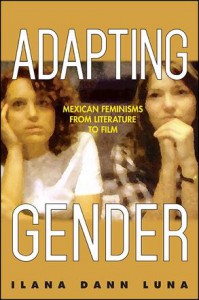
Adapting Gender
Mexican Feminisms from Literature to Film


 (0 vote)
Average rating:
| 0 | rating |  = We can do without = We can do without |
| 0 | rating |  = Good book = Good book |
| 0 | rating |  = Excellent book = Excellent book |
| 0 | rating |  = Unique / a reference = Unique / a reference |
Your rating: -
Book Presentation:
Demonstrates how film adaptations intersect with feminist discourse in neoliberal Mexico.
Adapting Gender offers a cogent introduction to Mexico's film industry, the history of women's filmmaking in Mexico, a new approach to adaptation as a potential feminist strategy, and a cultural history of generational changes in Mexico. Ilana Dann Luna examines how adapted films have the potential to subvert not only the intentions of the source text, but how they can also interrupt the hegemony of gender stereotypes in a broader socio-political context. Luna follows the industrial shifts that began with Salinas de Gortari's presidency, which made the long 1990s the precise moment in which subversive filmmakers, particularly women, were able to participate more fully in the industry and portrayed the lived experiences of women and non-gender-conforming men. The analysis focuses on Busi Cortés's El secreto de Romelia (1988), an adaptation of Rosario Castellanos's short novel El viudo Román (1964); Sabina Berman and Isabelle Tardán's Entre Pancho Villa y una mujer desnuda (1996), an adaptation of Berman's own play, Entre Villa y una mujer desnuda (1992); Guita Schyfter's Novia que te vea (1993), an adaptation of Rosa Nissán's eponymous novel (1992); and Jaime Humberto Hermosillo's De noche vienes, Esmeralda (1997), an adaptation of Elena Poniatowska's short story "De noche vienes" (1979). These adapted texts established a significant alternative to monolithic notions of national (gendered) identity, while critiquing, updating, and even queering, notions of feminism in the Mexican context.
About the Author:
Ilana Dann Luna is Assistant Professor of Spanish and Latin American Studies at Arizona State University.
Press Reviews:
"Drawing from Mexican as well as European and North American theorists, Luna's volume has the advantage of putting multiple film-critical traditions in dialog … Reading Luna's book invites us to imagine further possible extensions of her study. " — Reception
"Adapting Gender demonstrates Luna's considerable skills as a scholar. She deftly carries out a careful analysis of the literary and cinematic texts, putting them in the context of the evolving publishing and film industries. Written in a lively and engaging style, this is a unique synthesis of the evolution of feminism and the roles women have had—indeed, at times, been limited to—in Mexico and what this has meant for their creative output. " — Niamh Thornton, author of Revolution and Rebellion in Mexican Film
See the publisher website: State University of New York Press
> On a related topic:
Motherhood in Mexican Cinema, 1941–1991 (2013)
The Transformation of Femininity on Screen

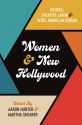
Women and New Hollywood (2023)
Gender, Creative Labor, and 1970s American Cinema
Dir. Aaron Hunter and Martha Shearer
Subject: Countries > United States
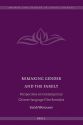

Italy's Other Women (2016)
Gender and Prostitution in Italian Cinema, 1940–1965
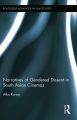
Narratives of Gendered Dissent in South Asian Cinemas (2014)
by Alka Kurian
Subject: Countries > Southeast Asia

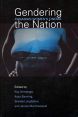
Gendering the Nation (1999)
Canadian Women's Cinema
by Kay Armatage, Kass Banning, Brenda Longfellow and Janine Marchessault
 Back
Back