


Animating Culture
Hollywood Cartoons from the Sound Era
by Eric Smoodin

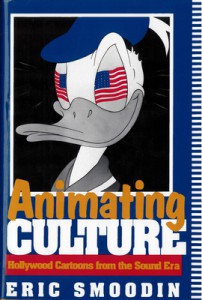

 (0 vote)
Average rating:
| 0 | rating |  = We can do without = We can do without |
| 0 | rating |  = Good book = Good book |
| 0 | rating |  = Excellent book = Excellent book |
| 0 | rating |  = Unique / a reference = Unique / a reference |
Your rating: -
Book Presentation:
Long considered "children's entertainment" by audiences and popular media, Hollywood animation has received little serious attention. Eric Smoodin's Animating Culture is the first and only book to thoroughly analyze the animated short film.
Usually running about seven or eight minutes, cartoons were made by major Hollywood studios––such as MGM, Warner Bros., and Disney––and shown at movie theaters along with a newsreel and a feature-length film. Smoodin explores animated shorta and the system that mass-produced them. How were cartoons exhibited in theaters? How did they tell their stories? Who did they tell them to? What did they say about race, class, and gender? How were cartoons related to the feature films they accompanied on the evening's bill of fare? What were the social functions of cartoon stars like Donald Duck and Minnie Mouse?
Smoodin argues that cartoons appealed to a wide audience––not just children––and did indeed contribute to public debate about political matters. He examines issues often ignored in discussions of animated film––issues such as social control in the U.S. army's "Private Snafu" cartoons, and sexuality and race in the "sites" of Betty Boop's body and the cartoon harem. Smoodin's analysis of the multiple discourses embedded in a variety of cartoons reveals the complex and sometimes contradictory ways that animation dealt with class relations, labor, imperialism, and censorship. His discussion of Disney and the Disney Studio's close ties with the U.S. government forces us to rethink the place of the cartoon in political and cultural life. Smoodin reveals the complex relationship between cartoons and the Hollywood studio system, and between cartoons and their audiences.
About the Author:
ERIC SMOODIN is an assistant professor of English at American University in Washington, D.C.
> From the same author:

Paris in the Dark (2020)
Going to the Movies in the City of Light, 1930–1950
by Eric Smoodin
Subject: General

The American Film History Reader (2014)
Dir. Jon Lewis and Eric Smoodin
Subject: Countries > United States

Snow White and the Seven Dwarfs (2012)
by Eric Smoodin
Subject: One Film > Snow White and the Seven Dwarfs
Looking Past the Screen (2007)
Case Studies in American Film History and Method
Dir. Jon Lewis and Eric Smoodin
Subject: Countries > United States
Regarding Frank Capra (2005)
Audience, Celebrity, and American Film Studies, 1930-1960
by Eric Smoodin
Subject: Director > Frank Capra
Hollywood Quarterly (2002)
Film Culture in Postwar America, 1945-1957
Dir. Eric Smoodin and Ann Martin
Subject: On Films > Movie magazines
> On a related topic:
Contemporary Hollywood Animation (2023)
Style, Storytelling, Culture and Ideology Since the 1990s
by Noel Brown




Policing Show Business (2024)
J. Edgar Hoover, the Hollywood Blacklist, and Cold War Movies
Subject: Countries > United States
Cinema and the Wealth of Nations (2017)
Media, Capital, and the Liberal World System
Subject: Sociology
 Back
Back