


Acting
Edited by Claudia Springer and Julie Levinson

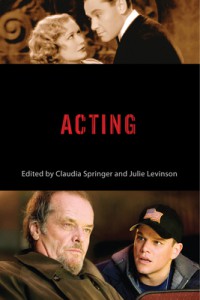

 (0 vote)
Average rating:
| 0 | rating |  = We can do without = We can do without |
| 0 | rating |  = Good book = Good book |
| 0 | rating |  = Excellent book = Excellent book |
| 0 | rating |  = Unique / a reference = Unique / a reference |
Your rating: -
Book Presentation:
Screen performances entertain and delight us but we rarely stop to consider actors’ reliance on their craft to create memorable characters. Although film acting may appear effortless, a host of techniques, artistic conventions, and social factors shape the construction of each role.
The chapters in Acting provide a fascinating, in-depth look at the history of film acting, from its inception in 1895 when spectators thrilled at the sight of vaudeville performers, Wild West stars, and athletes captured in motion, to the present when audiences marvel at the seamless blend of human actors with CGI. Experts in the field take readers behind the silver screen to learn about the craft of film acting in six eras: the silent screen (1895–1928), classical Hollywood (1928–1946), postwar Hollywood (1947–1967), the auteur renaissance (1968–1980), the New Hollywood (1981–1999), and the modern entertainment marketplace (2000–present). The contributors pay special attention to definitive performances by notable film stars, including Lillian Gish, Dick Powell, Ginger Rogers, Beulah Bondi, Marilyn Monroe, Marlon Brando, Jack Nicholson, Robert De Niro, Nicholas Cage, Denzel Washington, and Andy Serkis.
In six original essays, the contributors to this volume illuminate the dynamic role of acting in the creation and evolving practices of the American film industry.
Acting is a volume in the Behind the Silver Screen series—other titles in the series include Animation; Art Direction and Production Design; Cinematography; Costume, Makeup, and Hair; Directing; Editing and Special/Visual Effects; Producing; Screenwriting; and Sound.
About the authors:
CLAUDIA SPRINGER is in the English department at Framingham State University where she teaches film studies. She is the author of Electronic Eros: Bodies and Desire in the Postindustrial Age and James Dean Transfigured: The Many Faces of Rebel Iconography. JULIE LEVINSON is a professor of film at Babson College. She is the author of The American Success Myth on Film, and the editor of Alexander Payne: Interviews.
Press Reviews:
"Bringing together a group of respected film theorists, Springer and Levinson offer a thorough chronological investigation of acting styles in US Cinema … Recommended. All readers."
— CHOICE
"Richly detailed histories of the business and technologies behind screen acting with insightful analyses of major performances from silent cinema to CGI make Acting essential reading for anyone interested in movies."
— Sharon M. Carnicke
> Books with the same or similar title:
Acting (2020)
Make It Your Business: How to Avoid Mistakes and Achieve Success as a Working Actor
by Paul Russell
> From the same authors:

> On a related topic:
Moment of Action (2016)
Riddles of Cinematic Performance

Playing to the Camera (1999)
Film Actors Discuss Their Craft
by Bert Cardullo, Harry Geduld, Ronald Gottesman and Leigh Woods
Acting and performance in Hitchcock (2026)
Dir. Adrian Garvey and Victoria Lowe
Subject: Director > Alfred Hitchcock
 Back
Back

