


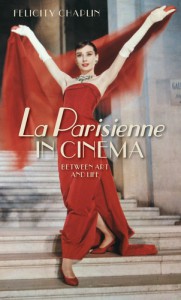
La Parisienne in Cinema
Between Art and Life


 (0 vote)
Average rating:
| 0 | rating |  = We can do without = We can do without |
| 0 | rating |  = Good book = Good book |
| 0 | rating |  = Excellent book = Excellent book |
| 0 | rating |  = Unique / a reference = Unique / a reference |
Your rating: -
Book Presentation:
Chic, sophisticated, seductive and enigmatic, the Parisienne possesses a je ne sais quoi that makes her difficult to define. But who or what is the Parisienne, and how is she depicted in cinema? The first book-length study on the subject combines scholarship in the fields of art history, literature and fashion to enrich our understanding of this intriguing cinematic figure, simultaneously offering new perspectives on film. Accessible and wide-ranging, it will be of immediate interest to students and researchers working in film studies, French studies and the broader humanities, as well as cinephiles and Francophiles alike.
About the Author:
Felicity Chaplin is Scholarly Teaching Fellow in French Studies at Monash University
Press Reviews:
'In this well-researched and insightful monograph, Felicity Chaplin presents the figure of the Parisienne in cinema "between art and life", concentrating on 1950s and 1960s French and Hollywood film. She covers approximately four films per chapter, over six main sections, using "Parisienne" as both a noun and an adjective, and writing of what she terms the "Parisienne-ness" of her subjects. This book is a valuable addition to film studies, fashion studies and general cultural studies. The style is engaging, and the research is wide-ranging and thought provoking.'
Dervila Cooke, Dublin City University, H-France Review Vol. 18, No. 92 (April 2018)
'"La Parisienne", as Chaplin explains, stands for an image of the city personified by a female figure. In the mid-nineteenth century, this became synonymous with the figure of an urban woman, an emblem of modernity whose mode of dress expressed her identity. She can be both artist and muse. Her class origins are not fixed: she might come from the demi-monde or the bourgeoiseie. In context, she can embody sexual openness and experimentation, or refined elegance and restraint.
'In her deft, dense, intriguing book, Chaplin has delineated an area of research; she has also created a space or set of possibilities for studies that can take her project further, deeper, into more specialised areas or specific forms of critical engagement.'
Philippa Hawker, Australian Book Review No. 42 (June-July 2018)
'Any study of as broad a corpus as is indicated by this book's title is likely to have multiple aims, and Felicity Chaplin's book seems to set itself not just the objective of adding cinema to the list of art forms in which La Parisienne frequently figures and has been studied (painting and drawing), but of using a typically art historical methodology (iconography) to do so. Approving of Alloway's anti-evaluative and implicitly anti-auteurist idea of culture as a continuum, Chaplin introduces her corpus as one that ranges across this continuum. Chaplin's book certainly does extensive impressive groundwork for further studies of the Parisienne figure in cinema.'
Kate Ince, University of Birmingham, EuropeNow, Issue 22 (2018)
'Hopefully, Chaplin's detailed, comprehensive and persuasive study will set the stage for keeping the spotlight on the Parisienne into the twenty-first century.'
Joe Hardwick, University of Queensland, Australian Journal of French Studies Vol. 55, No. 3 (2018)
'This book is an important analysis of the history of fashion, art, media, literature, and French culture. It is a tool for students and researchers with an interest in discussing the peculiar theme of the Parisienn e , but it also offers insights into a range of different subjects such as the intricate relationship between fashion and cinema, as well as further topics such as social mobility, cosmopolitanism, and self-fashioning.'
The Journal of Dress History
> From the same author:
The Art of Directing (2023)
A Concise Dictionary of France's Film Directors
Dir. Michaël Abecassis, Marcelline Block and Felicity Chaplin
Charlotte Gainsbourg (2020)
Transnational and Transmedia Stardom
Subject: Actress > Charlotte Gainsbourg
> On a related topic:
Archiving the Past (2026)
Women's Film History in France, 1927–1978
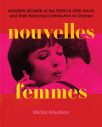
Nouvelles Femmes (2025)
Modern Women of the French New Wave and Their Enduring Contribution to Cinema
Pepsi and the Pill (2022)
Motherhood, Politics and Film in Britain and France, 1958–1969

Catherine Malabou and Contemporary French Literature and Film (2026)
Witnessing Plasticity
Mixed Feelings in France (2025)
White Femininity and Métissage in French Multicultural Comedy
The Cinematic Enfant Terrible (2025)
Rule Breaking Children and Teenagers in French Cinema
 Back
Back

