


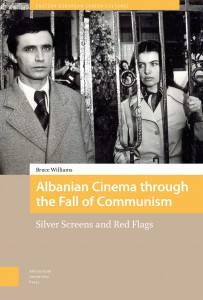
Albanian Cinema Through the Fall of Communism
Silver Screens and Red Flags


 (0 vote)
Average rating:
| 0 | rating |  = We can do without = We can do without |
| 0 | rating |  = Good book = Good book |
| 0 | rating |  = Excellent book = Excellent book |
| 0 | rating |  = Unique / a reference = Unique / a reference |
Your rating: -
Book Presentation:
Albanian cinema truly represents a terra incognita for most of the world. Decidedly Europe's most isolated country during the Cold War era, communist Albania had already been cut off from the West for centuries as a one of the western-most outposts of the Ottoman empire. Nonetheless, and unknown to most of the world, communist Albania had a vibrant cinema tradition. Although bound by official orthodoxy, the films of the state-run Kinostudio enterprise were surprisingly innovative and, at times, daringly subversive. This book opens with examinations of moving images in Albania from the Ottoman period, through those captured under independence and the Fascist occupation. It subsequently foregrounds transformations in Kinostudio, from the early optimism of socialist realism through the brooding social angst of the 1980s, which constitute a bridge to the socioeconomic concerns of Albanian films of the postcommunist period.
About the Author:
Bruce Williams is a professor of cultural studies at the William Paterson University of New Jersey. A specialist in film theory and history, his areas of research focus range from issues of national identity in the cinema to films of ethnic minority expression. He is co-author, with Keumsil Kim-Yoon of Two Lenses on the Korean Ethos: Key Cultural Concepts and Their Appearance in Cinema (2015). Williams has published extensively on Hispanic film and on the 'other cinema' of Europe. His current research foregrounds Albanian cinema in the transnational era.
> From the same author:
Two Lenses on the Korean Ethos (2015)
Key Cultural Concepts and Their Appearance in Cinema
by Keumsil Kim Yoon and Bruce Williams
> On a related topic:
Contemporary Balkan Cinema (2020)
Transnational Exchanges and Global Circuits
Dir. Lydia Papadimitriou and Ana Grgic
The Haunted Present (2026)
Slavic Neo-Noir Cinema and Television
Dir. Elena Prokhorova, Alexander Prokhorov and Rimgaila Salys
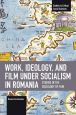
Work, Ideology, and Film under Socialism in Romania (2025)
Studies in the Sociology of Film
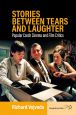
Stories between Tears and Laughter (2024)
Popular Czech Cinema and Film Critics
Cinema and the Environment in Eastern Europe (2023)
From Communism to Capitalism
Dir. Masha Shpolberg and Lukas Brasiskis
Cinema of Collaboration (2022)
DEFA Coproductions and International Exchange in Cold War Europe
 Back
Back

