


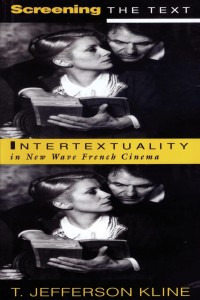
Screening the Text
Intertextuality in New Wave French Cinema


 (0 vote)
Moyenne des votes :
| 0 | vote |  = On peut s'en passer = On peut s'en passer |
| 0 | vote |  = Bon livre = Bon livre |
| 0 | vote |  = Excellent livre = Excellent livre |
| 0 | vote |  = Unique / une référence = Unique / une référence |
Votre vote : -
Description de l'ouvrage:
Cinema has always been "literary" in its desire to tell stories and in its need to borrow plots and narrative techniques from novels. But the French New Wave directors of the 1950s self-consciously rejected the idea that film was a mere extension of literature. With subversive techniques that exploded traditional methods of film narrative, they embraced fragmentation and alienation. Their cinema would be literature's rival, not its apprentice. In Screening the Text, T. Jefferson Kline argues that the New Wave's rebellious stance is far more complex and problematic than critics have acknowledged. Challenging conventional views of film and literature in postwar France, Kline explores the New Wave's unconscious obsession with the tradition it claimed to reject. He uncovers the wide range of the literary and cultural texts--American films, classical mythology, French literature, and a variety of Russian, Norwegian, German, and English writers and philosophers--as "screened" in seven films: Truffaut's Jules et Jim; Malle's Les Amants; Resnais's L'Ann e derni re Marienbad; Chabrol's Le Beau Serge; Rohmer's Ma Nuit chez Maud; Bresson's Pickpocket; and Godard's Pierrot le fou.
À propos de l'auteur :
T. Jefferson Kline is a professor of French at Boston University.
Revue de Presse:
Kline's readings are immensely persuasive. His book is scholarly and erudite, and his familiarity with the byways of French and American literature is impressive.
— Screen
This is a book which will provide useful literary background to students and teachers of the New Wave.
— Sight and Sound
Important [and] valuable... The French 'New Wave' may well have brought an end to the cinema de qualité but doubt is frequently expressed about the real importance of its own achievements. Kline's very welcome book manages to mark out new terrain for investigation in this area, as well as indicating some unexpected depths in the films he examines.
— Thomas Ennis, Modern and Contemporary France
This is a remarkable book, the first (known to me) of its kind and something of a tour de force... [Kline's thesis is] applied with rigor and sensitivity.
— Keith A. Reader, French Studies
Voir le site internet de l'éditeur Johns Hopkins University Press
> Sur un thème proche :
Cinema as a Worldbuilding Machine in the Digital Era (2022)
Essay on Multiverse Films and TV Series
Sujet : Theory
Fractal Narrative (2014)
About the Relationship Between Geometries and Technology and Its Impact on Narrative Spaces
Sujet : Theory
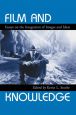
Film and Knowledge (2002)
Essays on the Integration of Images and Ideas
Dir. Kevin L. Stoehr
Sujet : Theory
 Retour

