


Cinema, If You Please
The Memory of Taste, the Taste of Memory

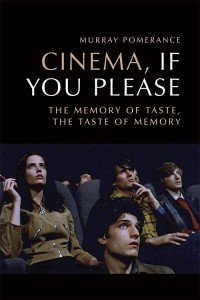

 (0 vote)
Moyenne des votes :
| 0 | vote |  = On peut s'en passer = On peut s'en passer |
| 0 | vote |  = Bon livre = Bon livre |
| 0 | vote |  = Excellent livre = Excellent livre |
| 0 | vote |  = Unique / une référence = Unique / une référence |
Votre vote : -
Description de l'ouvrage:
Examines how pre-modernist conceptions and social organizations of pleasure have impacted post-WWII film
• Explores our ways of watching film in light of socially organized forms of pleasure that date back to the seventeenth and eighteenth centuries
• Case studies include: Vertigo; The Passenger; A Matter of Life and Death; Clouds of Sils Maria; Personal Shopper; Call Me By Your Name; and Blow-Up
• Intensive concentration on screen colour and effects
In Cinema, If You Please, Murray Pomerance explores our ways of watching film in light of socially organized forms of pleasure that date back to the seventeenth and eighteenth centuries. Wedding the notion of pleasure in film viewing to the history of pleasure in the West, the book considers pleasure gardens and promenading; the history of oil painting and its display; the passion for travel and exposure to the exotic and strange; and forms of musical repetition and restatement. With in-depth studies of films like Vertigo, The Passenger, A Matter of Life and Death, Clouds of Sils Maria, Personal Shopper, Call Me By Your Name and Blow-Up, this ground-breaking book draws the reader into the past and the present at once, joining an understanding of personal and visual delight to their cultural and historical roots.
À propos de l'auteur :
Murray Pomerance is an independent scholar living in Toronto and Adjunct Professor in the School of Media and Communication at RMIT University, Melbourne. He is the author of The Film Cheat: Screen Artifice and Viewing Pleasure (2020), Grammatical Dreams (2020), Virtuoso: Film Performance and the Actor’s Magic (2019), A Dream of Hitchcock (2019), and Cinema, If You Please: The Memory of Taste, the Taste of Memory (2018), among many other volumes, and editor or co-editor of more than two dozen books including The Other Hollywood Renaissance (2020). He edits the “Horizons of Cinema” series at SUNY Press and the “Techniques of the Moving Image” series at Rutgers. A Voyage with Hitchcock and Color It True: Impressions of Cinema are both forthcoming.
Revue de Presse:
Independent scholar Murray Pomerance is one of the most original and eclectic films critics working today. In the present volume Pomerance examines, in minute detail, such classic films as Alfred Hitchcock’s Vertigo (1958), Michael Powell and Emeric Pressburger’s A Matter of Life and Death (aka Stairway to Heaven, 1946), and Michelangelo Antonioni’s Blow-Up (1966), and also recent films like Olivier Assayas’s The Clouds of Sils Maria (2016) and Personal Shopper (2017). Pomerance’s vision is uniquely his own; his stunning erudition jumps off the page with each fresh insight, each new way of looking at cinema and its concomitant disciplines. Pomerance’s writing is rich, seductive, and sensuous, drawing the reader into a closer encounter with film and life itself.– W. W. Dixon, University of Nebraska--Lincoln, CHOICE
Murray Pomerance is one of a small handful of cinema studies scholars who are wonderful writers and are masterful at structuring a chapter or a whole book so that at each point the reader is eager to discover what will come next, and is never disappointed. His prose is clear, accessible, and devoid of jargon. That is rare enough in cinema studies these days. Beyond that, it is pleasurable to read. This is crucial to its persuasiveness. Pleasure is the book's subject, after all, and the book's distinctive style is conclusive evidence that on this subject, the author knows whereof he speaks.– Professor William D. Rothman, University of Miami
Voir le site internet de l'éditeur Edinburgh University Press
> Du même auteur :

Mervyn LeRoy Comes to Town (2025)
Dir. Murray Pomerance et R. Barton Palmer
Sujet : Director > Mervyn LeRoy
The Biggest Thing in Show Business (2024)
Living It Up with Martin & Lewis
de Murray Pomerance et Matthew Solomon
Sujet : Actor > Jerry Lewis, Dean Martin
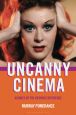
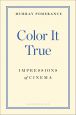
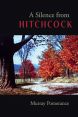

Autism in Film and Television (2022)
On the Island
Dir. Murray Pomerance et R. Barton Palmer
Sujet : Sociology
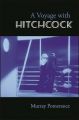
The Other Hollywood Renaissance (2020)
Dir. Dominic Lennard, R. Barton Palmer et Murray Pomerance
Sujet : Countries > United States
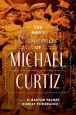
The Many Cinemas of Michael Curtiz (2018)
Dir. R. Barton Palmer et Murray Pomerance
Sujet : Director > Michael Curtiz


Close-Up (2018)
Great Cinematic Performances Volume 2: International
Dir. Murray Pomerance et Kyle Stevens
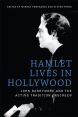
Hamlet Lives in Hollywood (2017)
John Barrymore and the Acting Tradition Onscreen
Dir. Murray Pomerance et Steven Rybin
Sujet : Actor > John Barrymore

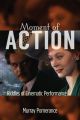
Moment of Action (2016)
Riddles of Cinematic Performance
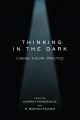
Thinking in the Dark (2015)
Cinema, Theory, Practice
Dir. Murray Pomerance et R. Barton Palmer
Sujet : Theory
George Cukor (2015)
Hollywood Master
Dir. Murray Pomerance et R. Barton Palmer
Sujet : Director > George Cukor

Hollywood's Chosen People (2012)
The Jewish Experience in American Cinema
Dir. Daniel Bernardi, Hava Tirosh-Samuelson et Murray Pomerance
Sujet : Countries > United States
A Little Solitaire (2011)
John Frankenheimer and American Film
Dir. Murray Pomerance
Sujet : Director > John Frankenheimer
Michelangelo Red Antonioni Blue (2011)
Eight Reflections on Cinema
Sujet : Director > Michelangelo Antonioni

American Cinema of the 1950s (2005)
Themes and Variations
Dir. Murray Pomerance
Sujet : On Films > Per period

Sugar, Spice, and Everything Nice (2001)
Cinemas of Girlhood
Dir. Frances Gateward et Murray Pomerance
Sujet : Sociology
Ladies and Gentlemen, Boys and Girls (2001)
Gender in Film at the End of the Twentieth Century
Dir. Murray Pomerance
Sujet : Sociology
> Sur un thème proche :
How Popular Culture Destroys Our Political Imagination (2024)
Capitalism and Its Alternatives in Film and Television
Sujet : Sociology

What Film Is Good For (2023)
On the Values of Spectatorship
de Julian Hanich et Martin P. Rossouw
Sujet : Sociology
Watching Films (2013)
New Perspectives on Movie-Going, Exhibition and Reception
Dir. Albert Moran et Karina Aveyard
Sujet : Sociology
 Retour

