


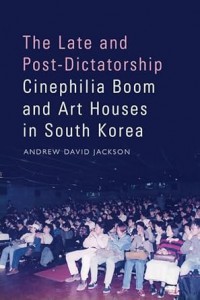
The Late and Post-Dictatorship
Cinephilia Boom and Art Houses in South Korea


 (0 vote)
Average rating:
| 0 | rating |  = We can do without = We can do without |
| 0 | rating |  = Good book = Good book |
| 0 | rating |  = Excellent book = Excellent book |
| 0 | rating |  = Unique / a reference = Unique / a reference |
Your rating: -
Book Presentation:
This monograph examines an unexplored area of South Korean cinema history– the 1985-1997 growth of art film exhibition, consumption, and cinephilia. This moment of heightened interest in art film altered how many Koreans conceptualised cinema and helped pave the way for the critical success of South Korean film. This historical study analyses the cultural, political, social, and economic developments of the post-1985 period that increased interest in European art film. It looks at the interactions of art house exhibitors with cinephile audiences, the media and the state-level administrators responsible for governing the industry. The aim of young cinephiles was nothing less than a bottom-up cultural transformation of a society emerging from three decades of dictatorship. The analysis is based on the previously unheard voices of audiences who participated in the cinephilia. This study is both a history of an era in Korean cinema and an argument about the impact of this period of cultural renewal on the industry.
About the Author:
Andrew David Jackson is an Associate Professor, Convenor of Korean Studies and Director of the Monash University Korean Studies Research Hub at Monash University, Melbourne.
Press Reviews:
Andrew Jackson’s expertly researched book on the rise and fall of non-commercial or art-house film exhibition in late- and post-authoritarian South Korea is a delightful addition to Korean film studies. Highly recommended to anyone who wants to understand what generated famous cinephile directors such as Park Chan-wook and Bong Joon-ho. -- Hye Seung Chung, author of Hollywood Diplomacy: Film Regulation, Foreign Relations, and East Asian Representations
Jackson’s study of cinephilia provides an invaluable resource linking film consumption to the historical context of the South Korean political transition from a US backed military dictatorship towards representative government. It unravels the generational shift from political activism to consumption and thus provides a contextualisation of what became the Korean New Wave. -- Isolde Standish, Freelance Writer and Academic.
> On a related topic:
The Korean War and Postmemory Generation (2023)
Contemporary Korean Arts and Films
Movie Minorities (2021)
Transnational Rights Advocacy and South Korean Cinema

Movie Migrations (2015)
Transnational Genre Flows and South Korean Cinema
Two Lenses on the Korean Ethos (2015)
Key Cultural Concepts and Their Appearance in Cinema
by Keumsil Kim Yoon and Bruce Williams
Campus Cinephilia in Neoliberal South Korea (2022)
A Different Kind of Fun
Pop Empires (2019)
Transnational and Diasporic Flows of India and Korea
Dir. S. Heijin Lee, Monika Mehta and Robert Ji-Song Ku

 Back
Back

