


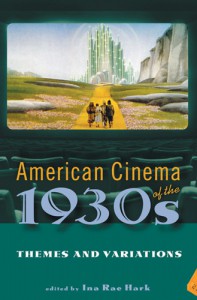
American Cinema of the 1930s
Themes and Variations
Edited by Ina Rae Hark


 (0 vote)
Average rating:
| 0 | rating |  = We can do without = We can do without |
| 0 | rating |  = Good book = Good book |
| 0 | rating |  = Excellent book = Excellent book |
| 0 | rating |  = Unique / a reference = Unique / a reference |
Your rating: -
Book Presentation:
Probably no decade saw as many changes in the Hollywood film industry and its product as the 1930s did. At the beginning of the decade, the industry was still struggling with the transition to talking pictures. Gangster films and naughty comedies starring Mae West were popular in urban areas, but aroused threats of censorship in the heartland. Whether the film business could survive the economic effects of the Crash was up in the air. By 1939, popularly called "Hollywood's Greatest Year," films like Gone With the Wind and The Wizard of Oz used both color and sound to spectacular effect, and remain American icons today. The "mature oligopoly" that was the studio system had not only weathered the Depression and become part of mainstream culture through the establishment and enforcement of the Production Code, it was a well-oiled, vertically integrated industrial powerhouse.
The ten original essays in American Cinema of the 1930s focus on sixty diverse films of the decade, including Dracula, The Public Enemy, Trouble in Paradise, 42nd Street, King Kong, Imitation of Life, The Adventures of Robin Hood, Swing Time, Angels with Dirty Faces, Nothing Sacred, Jezebel, Mr. Smith Goes toWashington, and Stagecoach .
About the Author:
INA RAE HARK is a professor of English and film studies at the University of South Carolina.
Press Reviews:
"There is nothing like this series. Screen Decades firmly situates American cinema in the realms of material culture, popular culture, cultural narrative, reception analysis, and industrial history."
— American Quarterly
"There is nothing like this series. Screen Decades firmly situates American cinema in the realms of material culture, popular culture, cultural narrative, reception analysis, and industrial history."
— American Quarterly
> From the same author:
Screening the Male (2016)
Exploring Masculinities in the Hollywood Cinema
Dir. Steve Cohan and Ina Rae Hark
Subject: Sociology

> On a related topic:

Feature Films, 1931–1940 (1993)
American Film Institute Catalog of Motion Pictures Produced in the United States
Subject: On Films > Per period
Transpacific Convergences (2022)
Race, Migration, and Japanese American Film Culture before World War II
by Denise Khor
Subject: Countries > United States
Who's in the Money? (2018)
The Great Depression Musicals and Hollywood's New Deal
Cinema and the Wealth of Nations (2017)
Media, Capital, and the Liberal World System
Subject: Sociology
Celluloid Pueblo (2016)
Western Ways Films and the Invention of the Postwar Southwest
Subject: Genre > Documentary
A Divided World (2011)
Hollywood Cinema and Emigré Directors in the Era of Roosevelt and Hitler, 1933-1948
by Nick Smedley
Subject: Countries > United States
 Back
Back

