


Celluloid Pueblo
Western Ways Films and the Invention of the Postwar Southwest

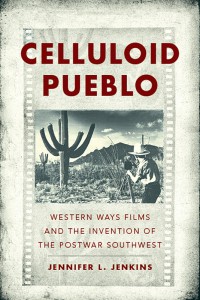

 (0 vote)
Average rating:
| 0 | rating |  = We can do without = We can do without |
| 0 | rating |  = Good book = Good book |
| 0 | rating |  = Excellent book = Excellent book |
| 0 | rating |  = Unique / a reference = Unique / a reference |
Your rating: -
Book Presentation:
The five Cs of Arizona—copper, cattle, cotton, citrus, and climate—formed the basis of the state’s livelihood and a readymade roster of subjects for films. With an eye on the developing national appetite for all things western, Charles and Lucile Herbert founded Western Ways Features in 1936 to document the landscape, regional development, and diverse cultures of Arizona, the U.S. Southwest, and northern Mexico.
Celluloid Pueblo tells the story of Western Ways Features and its role in the invention of the Southwest of the imagination. Active during a thirty-year period of profound growth and transformation, the Herberts created a dynamic visual record of the region, and their archival films now serve as a time capsule of the Sunbelt in the mid-twentieth century. Drawing upon a ten-year career with Fox, Western Ways owner-operator Charles Herbert brought a newshound’s sensibility and acute skill at in-camera editing to his southwestern subjects. The Western Ways films provided counternarratives to Hollywood representations of the West and established the regional identity of Tucson and the borderlands.
Jennifer L. Jenkins’s broad-sweeping book examines the Herberts’ work on some of the first sound films in the Arizona borderlands and their ongoing promotion of the Southwest. The book covers the filmic representation of Native and Mexican lifeways, Anglo ranching and leisure, Mexican missions and tourism, and postwar borderlands prosperity and progressivism. The story of Western Ways closely follows the boom-and-bust arc of the midcentury Southwest and the constantly evolving representations of an exotic—but safe and domesticated—frontier.
About the Author:
Jennifer L. Jenkins teaches in both the English department and the School of Information at the University of Arizona. Her work has appeared in the journals ESQ, the Henry James Review, Twentieth-Century Literature, Journal of Popular Culture, and The Moving Image. She has curated the Puro Mexicano Tucson Film Festival.
Press Reviews:
"[This] critical examination of the Western Ways films illustrates how one independent filmmaker reinforced and challenged the dominant images of the Southwest produced by Hollywood, and romanticized art and representations that promoted the region for commerce."—Mark Neumann, co-author of Recording Culture: Audio Documentary and the Ethnographic Experience
"A welcome glimpse back in time to a beloved area."—Southwestern Historical Quarterly
"Jenkins has a keen eye for cinematic and ethnographic complexity; she demonstrates both the documentary significance of the films and their complex engagements with perspective, performance, and power."—Western Literature Association
> On a related topic:
The Possible South (2020)
Documentary Film and the Limitations of Biraciality
Subject: Genre > Documentary
Governing Visions of the Real (2016)
The National Film Unit and Griersonian Documentary Film in Aotearoa/New Zealand
Subject: Genre > Documentary
Across the World with the Johnsons (2016)
Visual Culture and American Empire in the Twentieth Century
by Prue Ahrens, Lamont Lindstrom and Fiona Paisley
Subject: Genre > Documentary
American Masculinities in Contemporary Documentary Film (2024)
Up Close Behind the Mask
by Sara Martín
Subject: Genre > Documentary
Beyond Bias (2021)
Conservative Media, Documentary Form, and the Politics of Hysteria
by Scott Krzych
Subject: Genre > Documentary
Screening Reality (2020)
How Documentary Filmmakers Reimagined America
by Jon Wilkman
Subject: Genre > Documentary
American Documentary Filmmaking in the Digital Age (2018)
Depictions of War in Burns, Moore, and Morris
Subject: Genre > Documentary

Projecting Race (2016)
Postwar America, Civil Rights, and Documentary Film
Subject: Genre > Documentary
 Back
Back

