


Fade to Gray
Aging in American Cinema
de Timothy Shary et Nancy McVittie

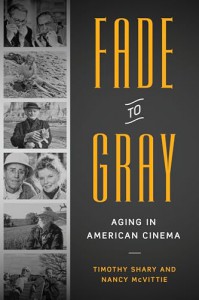

 (0 vote)
Moyenne des votes :
| 0 | vote |  = On peut s'en passer = On peut s'en passer |
| 0 | vote |  = Bon livre = Bon livre |
| 0 | vote |  = Excellent livre = Excellent livre |
| 0 | vote |  = Unique / une référence = Unique / une référence |
Votre vote : -
Description de l'ouvrage:
Winner, Choice Outstanding Academic Title, 2017
Americans are living longer and reinventing both work and retirement, but Hollywood movies barely hint at this reality of contemporary society. In many popular films, older characters fade into irrelevance, inactivity, or absurdity, or else they stay in the background as wise elders while younger characters provide the action. Most American films do not attempt to portray the rich variety of experiences or the sensitive aging issues that people confront in the years beyond fifty.
Fade to Gray offers one of the first extended studies of the portrayal of older people in American cinema from the silent era to the present. Writing in an accessible style for both general audiences and scholars, Timothy Shary and Nancy McVittie examine social attitudes toward aging through an analysis of hundreds of individual films, including such classics as You Can’t Take It With You (1938), Rosemary’s Baby (1968), Grumpy Old Men (1993), and Nebraska (2013). They show how representations of the aging process and depictions of older people embracing or enduring the various experiences of longer lives have evolved over the past century, as well as how film industry practices have both reflected and influenced perceptions of aging in American society. Exposing the social and political motivations for negative cinematic portrayals of the elderly, Fade to Gray also gives visibility to films that provide opportunities for better understanding and appreciation of the aged and the aging process.
Revue de Presse:
Fade to Gray proves a worthwhile and often insightful study that makes a compelling case for the vital importance of cinematic representation. PopMatters
A valuable and long-overdue addition to the body of scholarship within film studies that critically examines representations of socially marginalized individuals and identity groups. Cumulatively, the films under consideration and their highly revealing interconnections with d/evolving cultural conceptions and social policies related to aging prove the necessity and urgency of this study. Maria San Filippo, author of The B Word: Bisexuality in Contemporary Film and Television
Voir le site internet de l'éditeur University of Texas Press
> Des mêmes auteurs :


The Films of Amy Heckerling (2016)
Dir. Frances Smith et Timothy Shary
Sujet : Director > Amy Heckerling

> Sur un thème proche :
The Cinema of Converging Lives (2025)
Complex Films and Intersecting Stories in an Isolated World
de Lucy Fischer
Sujet : Sociology
Cop Knowledge (2000)
Police Power and Cultural Narrative in Twentieth-Century America
Sujet : Sociology
Alien Identities (1999)
Exploring Differences in Film and Fiction
de Deborah Cartmell, I. Q. Hunter, Heidi Kaye et Imelda Whelehan
Sujet : Sociology
Beyond the Stars 4 (1993)
Locales in American Popular Film
Dir. Paul Loukides et Linda K. Fuller
Sujet : Sociology
Beyond the Stars 1 (1990)
Stock Characters in American Popular Film
Dir. Paul Loukides et Linda K. Fuller
Sujet : Sociology
Interactional Approach to Cinematic Discourse (2022)
How Do Woody Allen's Characters Talk?
Sujet : Director > Woody Allen
 Retour

