

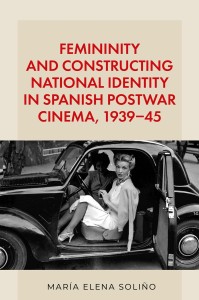
Femininity and constructing national identity in Spanish postwar cinema, 1939–45


 (0 vote)
Average rating:
| 0 | rating |  = We can do without = We can do without |
| 0 | rating |  = Good book = Good book |
| 0 | rating |  = Excellent book = Excellent book |
| 0 | rating |  = Unique / a reference = Unique / a reference |
Your rating: -
Book Presentation:
Femininity and constructing national identity in Spanish postwar cinema, 1939-45 examines the intersection of gender politics and Spanish film production in the period between the end of the Spanish Civil War and the end of WWII. This was a period when the Franco regime was attempting to rewrite the history of the Spanish Civil War in the popular imagination through the production of war pictures that glorified the victors. Surprisingly, directors who had proven themselves firm supporters of the Franco regime had their work censored when they attempted to portray female wartime heroism. Through comparative studies of films that received official support and those that were censored, a clear pattern emerges that outlines the parameters of how women could acceptably be portrayed in an emerging Spanish industry that sought to define the place of women in postwar Spanish society.
> On a related topic:
Hispanic and Lusophone Women Filmmakers (2015)
Theory, Practice and Difference
Dir. Parvati Nair and Julian Gutierrez-Albilla


Global Genres, Local Films (2015)
The Transnational Dimension of Spanish Cinema
Dir. Elena Oliete-Aldea


Confessional Cinema (2017)
Religion, Film, and Modernity in Spain's Development Years, 1960-1975
by Jorge Pérez

Contemporary Hispanic Cinema (2013)
Interrogating the Transnational in Spanish and Latin American Film
Dir. Stephanie Dennison
Subject: Countries > Latin America
 Back
Back