


Kim Ki-duk

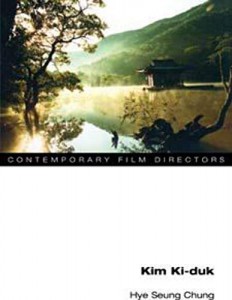

 (0 vote)
Moyenne des votes :
| 0 | vote |  = On peut s'en passer = On peut s'en passer |
| 0 | vote |  = Bon livre = Bon livre |
| 0 | vote |  = Excellent livre = Excellent livre |
| 0 | vote |  = Unique / une référence = Unique / une référence |
Votre vote : -
Description de l'ouvrage:
This study investigates the controversial motion pictures written and directed by the independent filmmaker Kim Ki-duk, one of the most acclaimed Korean auteurs in the English-speaking world. Propelled by underdog protagonists who can only communicate through shared corporeal pain and extreme violence, Kim's graphic films have been classified by Western audiences as belonging to sensationalist East Asian "extreme" cinema, and Kim has been labeled a "psychopath" and "misogynist" in South Korea. Drawing upon both Korean-language and English-language sources, Hye Seung Chung challenges these misunderstandings, recuperating Kim's œuvre as a therapeutic, yet brutal cinema of Nietzschean ressentiment (political anger and resentment deriving from subordination and oppression). Chung argues that the power of Kim's cinema lies precisely in its ability to capture, channel, and convey the raw emotions of protagonists who live on the bottom rungs of Korean society. She provides historical and postcolonial readings of victimization and violence in Kim's cinema, which tackles such socially relevant topics as national division in Wild Animals and The Coast Guard and U.S. military occupation in Address Unknown. She also explores the religious and spiritual themes in Kim's most recent works, which suggest possibilities of reconciliation and transcendence.
Voir le site internet de l'éditeur University of Illinois Press
Voir la filmographie complète de Kim Ki-duk sur le site IMDB ...
> Du même auteur :
Cinema under National Reconstruction (2024)
State Censorship and South Korea's Cold War Film Culture
Movie Minorities (2021)
Transnational Rights Advocacy and South Korean Cinema
Hollywood Diplomacy (2020)
Film Regulation, Foreign Relations, and East Asian Representations
Sujet : Sociology

Movie Migrations (2015)
Transnational Genre Flows and South Korean Cinema
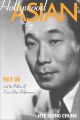
Hollywood Asian (2006)
Philip Ahn and the Politics of Cross-Ethnic Performance
Sujet : Actor > Philip Ahn
> Sur un thème proche :
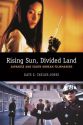
Rising Sun, Divided Land (2013)
Japanese and South Korean Filmmakers
 Retour

